
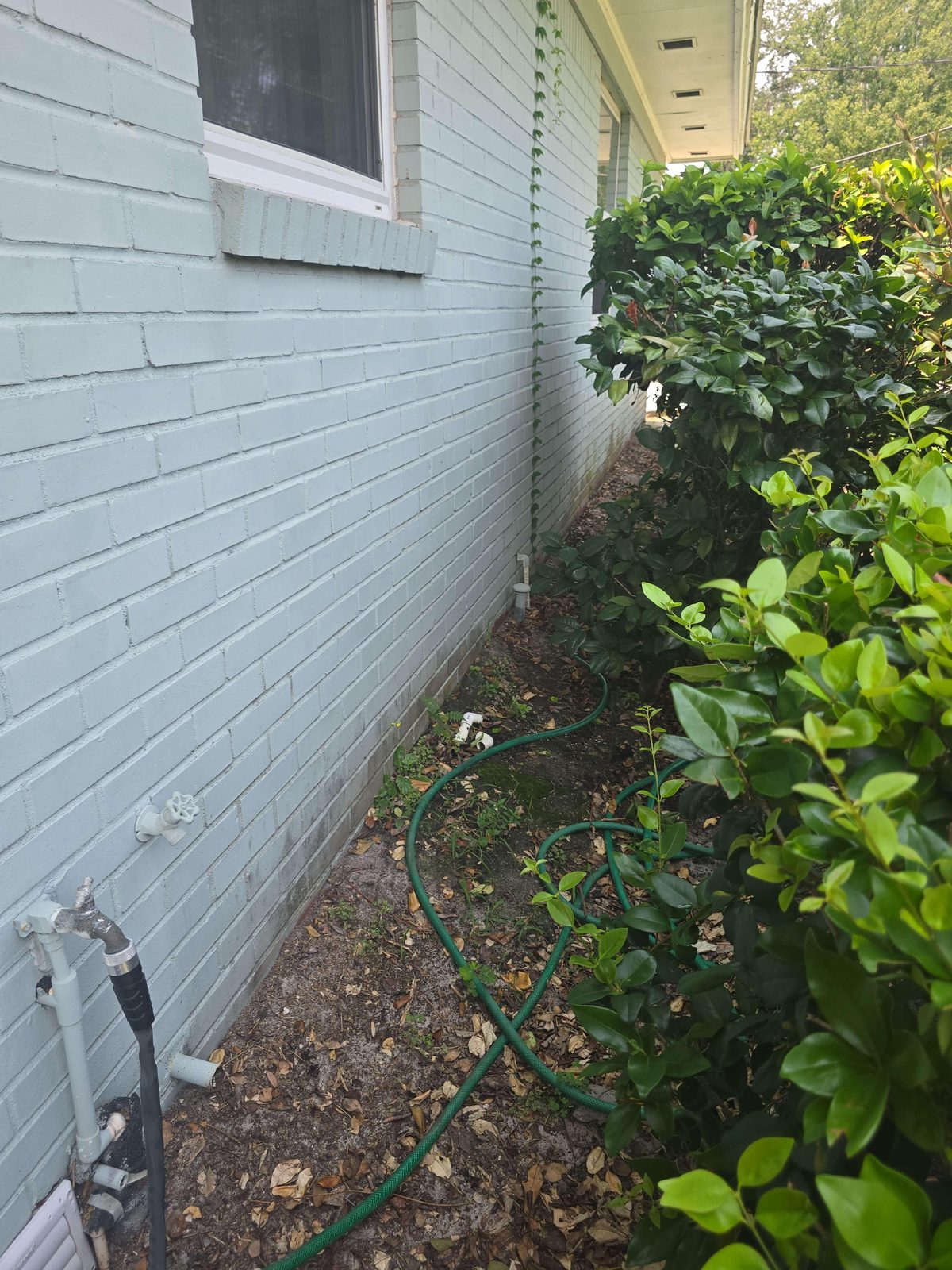
A vent pipe at the side of the house points to a possible underground fuel tank that needs professional evaluation.
What we found
On the right side of the building exterior, a vent pipe — a small tube that allows a buried tank to breathe — was visible at ground level. This is a common indicator that an underground fuel or oil storage tank is buried nearby. The inspection could not determine the tank's condition, whether it is still connected to anything, or whether it was ever formally decommissioned (officially closed and certified as safe).
Why it happens here
Homes that once used fuel oil for heat were often served by an underground storage tank buried in the yard. When heating systems were later converted to gas or other fuels, these tanks were sometimes left in place. A vent pipe remaining at the surface is one of the clearest visible signs that a tank was installed at some point.
What it means for you
An underground tank whose history is unknown is a property condition worth understanding before you close. Regulatory agencies in many areas require formal, documented decommissioning — typically pumping, cleaning, and either removal or filling with an inert material — and some require that paperwork to be filed with an environmental authority. Without documentation, questions about the tank can come up during insurance applications, mortgage underwriting, or a future sale.
What to do
Engage a licensed environmental contractor or underground storage tank specialist to evaluate the tank's status. They can determine what is present, check whether any prior closure work meets current environmental requirements, and provide written documentation of the tank's condition — which is the record lenders, insurers, and future buyers typically ask for.
How common is this
Underground fuel oil tanks are not unusual in residential properties, particularly in regions where oil heat was common before natural gas lines became widely available. Many have been properly decommissioned over the years; others have not. Finding a vent pipe at grade is a routine reason to bring in a specialist for a closer look.
Getting a specialist's written assessment now gives you a clear picture of what you're buying and the documentation you'll likely need down the road.
Curious what's on record for a specific address?
Look it up on PermitSearch → (opens in a new tab)Ready to book your own inspection?
Schedule an inspection →