
A Deadbolt That Needs a Key From the Inside, Too
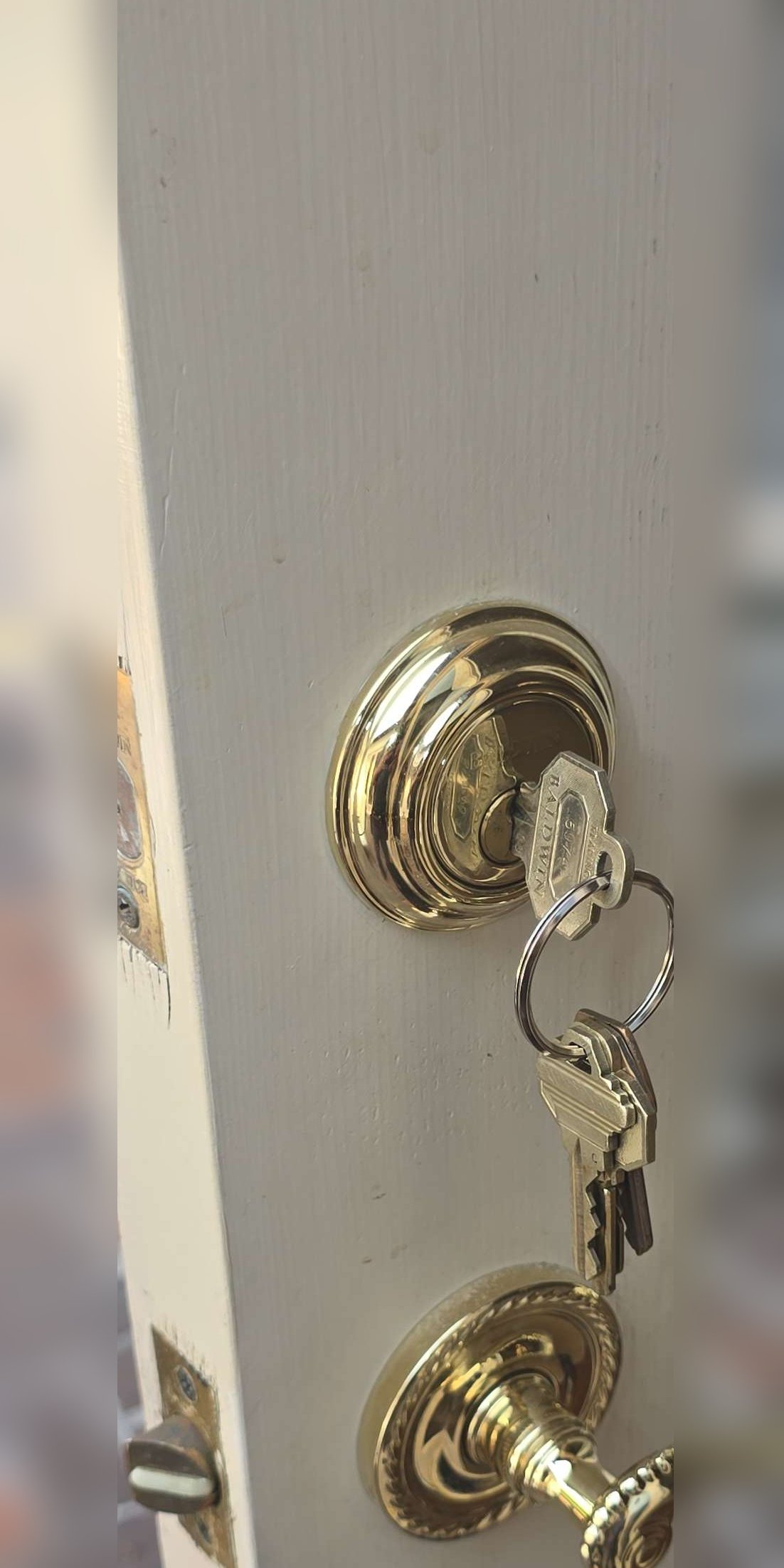
What we found
Deadbolts on exterior doors that take a key on both sides — no thumb-turn (the little knob you twist) on the inside. Lock it and pocket the key, and the door is locked against you too. We've flagged this at two separate inspections in the past few weeks, on multiple doors of the same home.
Why it happens here
These locks are usually a deliberate choice, not a mistake: when a door has glass in or beside it, a double-keyed deadbolt stops someone from breaking the pane, reaching through, and twisting the thumb-turn. Plenty of older Jacksonville homes with French doors and sidelights — the narrow windows flanking an entry door — got them for exactly that reason.
What it means for you
The trade-off is the direction nobody thinks about: getting out. In a fire or any emergency where seconds count, an exit door that demands a key is an exit door that may as well be a wall if the key isn't at hand — at night, in smoke, or for a guest or child who doesn't know where it's kept. Life-safety standards come down firmly on the side of keyless exit from inside the home.
What to do
A locksmith can swap the interior cylinder for a thumb-turn — a single-cylinder deadbolt — in under an hour per door, keeping the same hardware style. If the glass-nearby concern matters to you, discuss it with the locksmith; there are ways to address both. What we'd steer you away from is the common compromise of leaving a key "hidden" near the door: in an emergency, hidden is the same as missing.
How common is this
A steady minority of older homes — enough that we check every exterior door on every inspection. Two homes in the last few weeks carried them, which is what prompted this note.
Locks are for keeping people out. It's worth remembering the same door is how you get out.
Curious what's on record for a specific address?
Look it up on PermitSearch → (opens in a new tab)Ready to book your own inspection?
Schedule an inspection →