
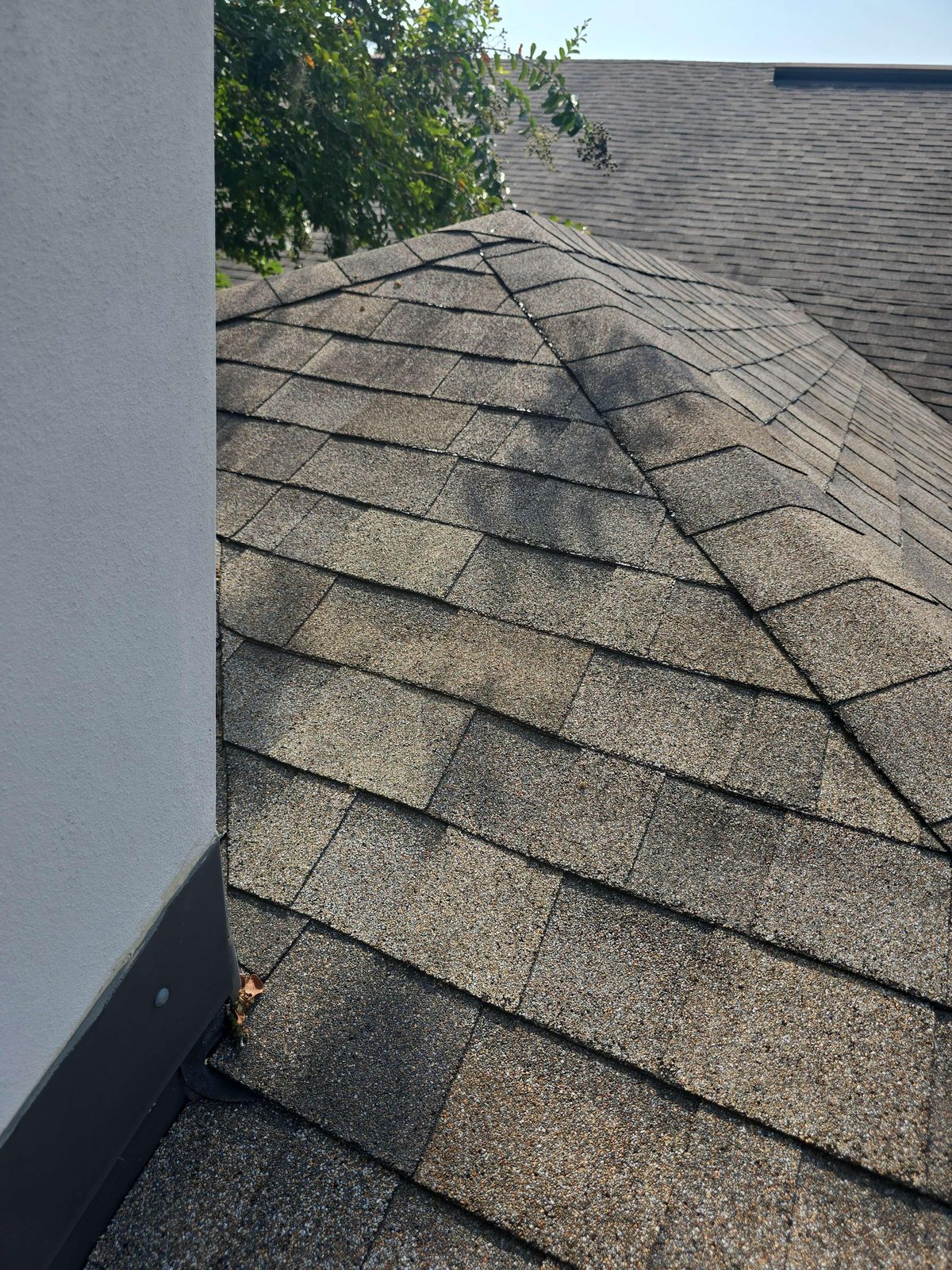
The roof shingles are showing advanced wear that warrants a contractor evaluation before closing
What we found
The architectural shingles—the thick, layered style of asphalt roof tile common on homes built in the past few decades—showed loss of surface granules (the gritty mineral coating bonded to the top of each shingle), weathering and deterioration along the shingle edges, and in localized spots, the underlying fiberglass mesh had become exposed where the asphalt substrate beneath it had worn away. Generalized discoloration and staining were present across the roof surface as well.
Why it happens here
Asphalt shingles shed their granule coating gradually over time through rain, sun, and temperature cycling. As granules wash away, the asphalt beneath is exposed to ultraviolet light, which dries and cracks it. Edge deterioration typically accelerates once the protective layers thin out. These are signs of age-related wear rather than any single event.
What it means for you
Granules and intact asphalt are what allow a roof to shed water and block UV rays. When those layers are compromised—especially where fiberglass mesh is exposed—the roof's ability to do both jobs is reduced. Architectural shingles are generally rated for a 20-to-30-year service life, and the conditions observed are consistent with the later part of that range. Separately, insurers in this region commonly apply added scrutiny to older roof coverings when evaluating homeowner's policies, so it is worth confirming coverage terms early.
What to do
Have a qualified roofing contractor inspect the covering and give you a written assessment of its remaining serviceability along with repair and replacement options. Aim to do this before your inspection contingency expires so you have a clear picture of the potential cost before you are committed.
How common is this
Roof wear is one of the most frequently observed major findings in home inspections, particularly on homes whose shingles have reached the back half of their rated service life. It is a normal outcome of aging materials, not a sign of neglect in every case.
Getting a roofing contractor's written opinion now gives you real numbers to work with—before you reach the closing table.
Curious what's on record for a specific address?
Look it up on PermitSearch → (opens in a new tab)Ready to book your own inspection?
Schedule an inspection →