
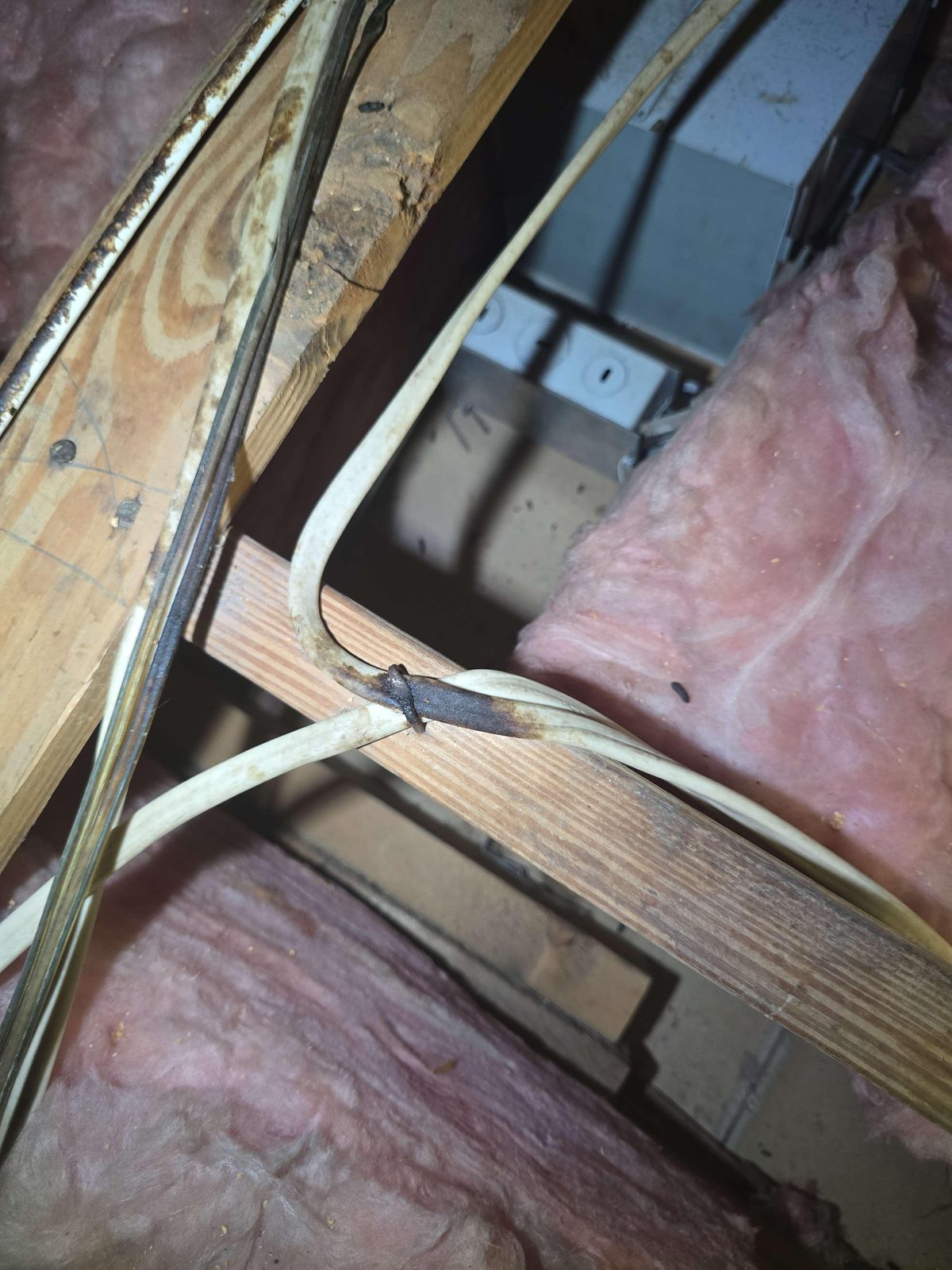
Scorched wiring insulation was observed in the attic above the main living area
What we found
At multiple locations in the attic above the main living area, the outer plastic jacket — called sheathing — on the nonmetallic-sheathed cable (commonly known by the brand-style name Romex) showed visible scorching, meaning burn-like discoloration on the surface of the wiring.
Why it happens here
Nonmetallic-sheathed cable is rated to carry only so much electrical current at specific temperature limits; when a circuit runs hotter than the cable is designed for — due to conditions such as a loose connection, an overloaded circuit, or a damaged conductor — the plastic sheathing can discolor or scorch.
What it means for you
Scorched insulation is a recognized sign that the wiring in those locations experienced elevated heat; attic spaces contain wood framing and insulation, which are combustible materials, and this condition is rated as a major finding by your inspector.
What to do
Have a qualified licensed electrician evaluate the affected wiring and perform any repairs they determine are necessary; your inspection contingency period is the practical window to get this done before the transaction moves forward.
How common is this
Scorching on cable sheathing is not a routine maintenance item — it is a condition that inspectors flag specifically because it indicates the wiring exceeded normal operating temperatures at some point.
A licensed electrician can trace the affected circuits, identify the source of the heat, and tell you exactly what the wiring needs.
Curious what's on record for a specific address?
Look it up on PermitSearch → (opens in a new tab)Ready to book your own inspection?
Schedule an inspection →