
The firewall between dwelling units showed gaps when viewed from the attic
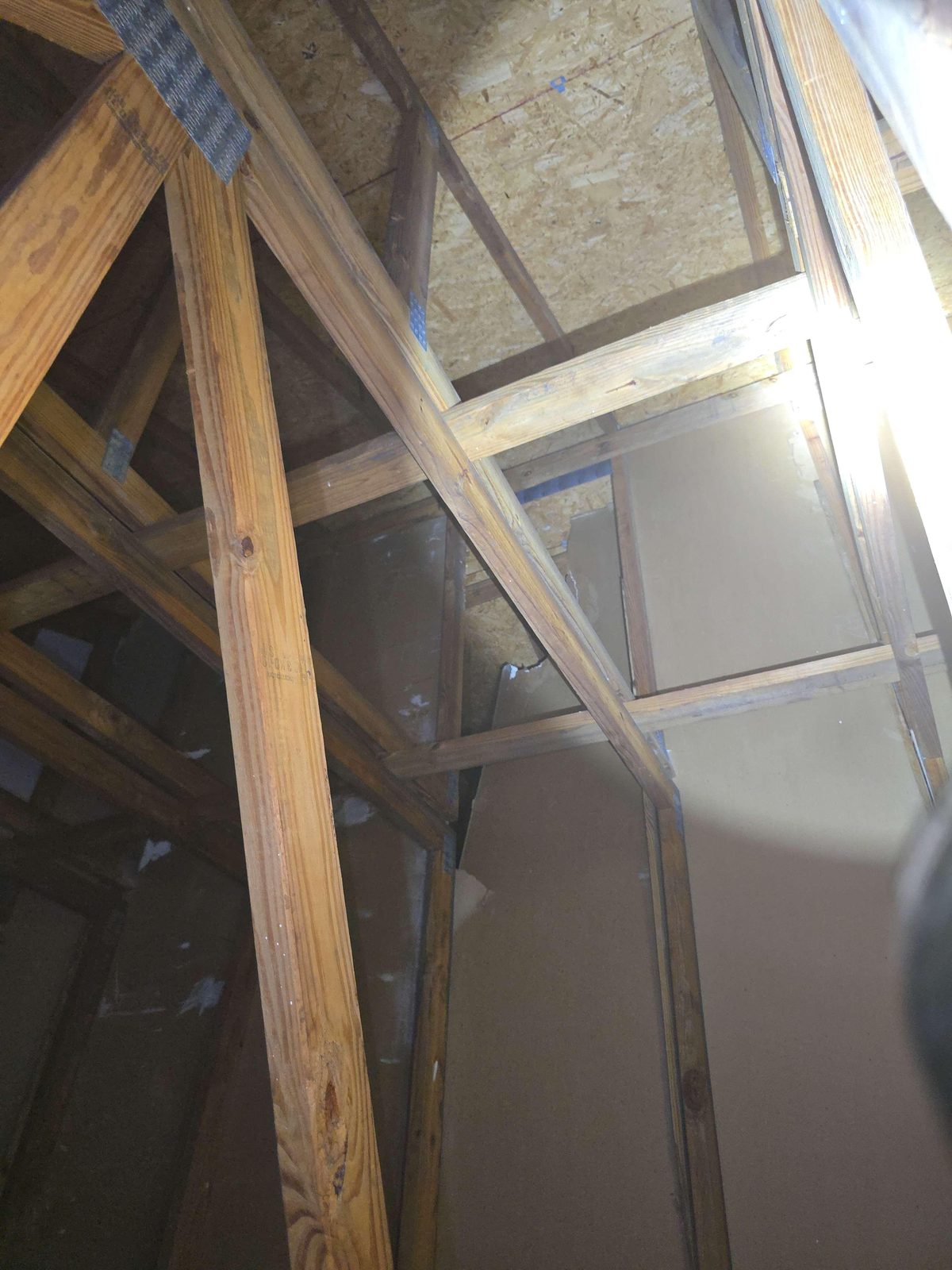
What we found
From the attic space, the firewall — the specially built wall assembly designed to slow the movement of fire and smoke between two attached dwelling units — showed signs of compromise. That means the assembly had gaps or breaches rather than a continuous, intact barrier.
Why it happens here
Firewall assemblies are sometimes penetrated during renovations or utility work, when plumbing pipes, electrical wiring, or HVAC ducts are run through the wall. If those openings aren't sealed with listed fire-stop materials — products rated specifically to resist fire — the assembly no longer performs as a continuous barrier.
What it means for you
A firewall between units is built to give occupants on both sides extra time to evacuate if a fire starts in one unit. Gaps in that assembly reduce the buffer it's intended to provide.
What to do
A qualified, licensed contractor should examine the firewall assembly and repair any compromised areas so the separation works as it was designed to. This is a standard finding that has a straightforward corrective path.
How common is this
Firewall breaches in attics are a relatively common discovery in attached or multi-unit homes, particularly where utility runs have been added or changed over the years without sealed penetrations.
A conversation with a licensed contractor will clarify exactly what repairs are needed to bring the assembly back to its intended condition.
Curious what's on record for a specific address?
Look it up on PermitSearch → (opens in a new tab)Ready to book your own inspection?
Schedule an inspection →