
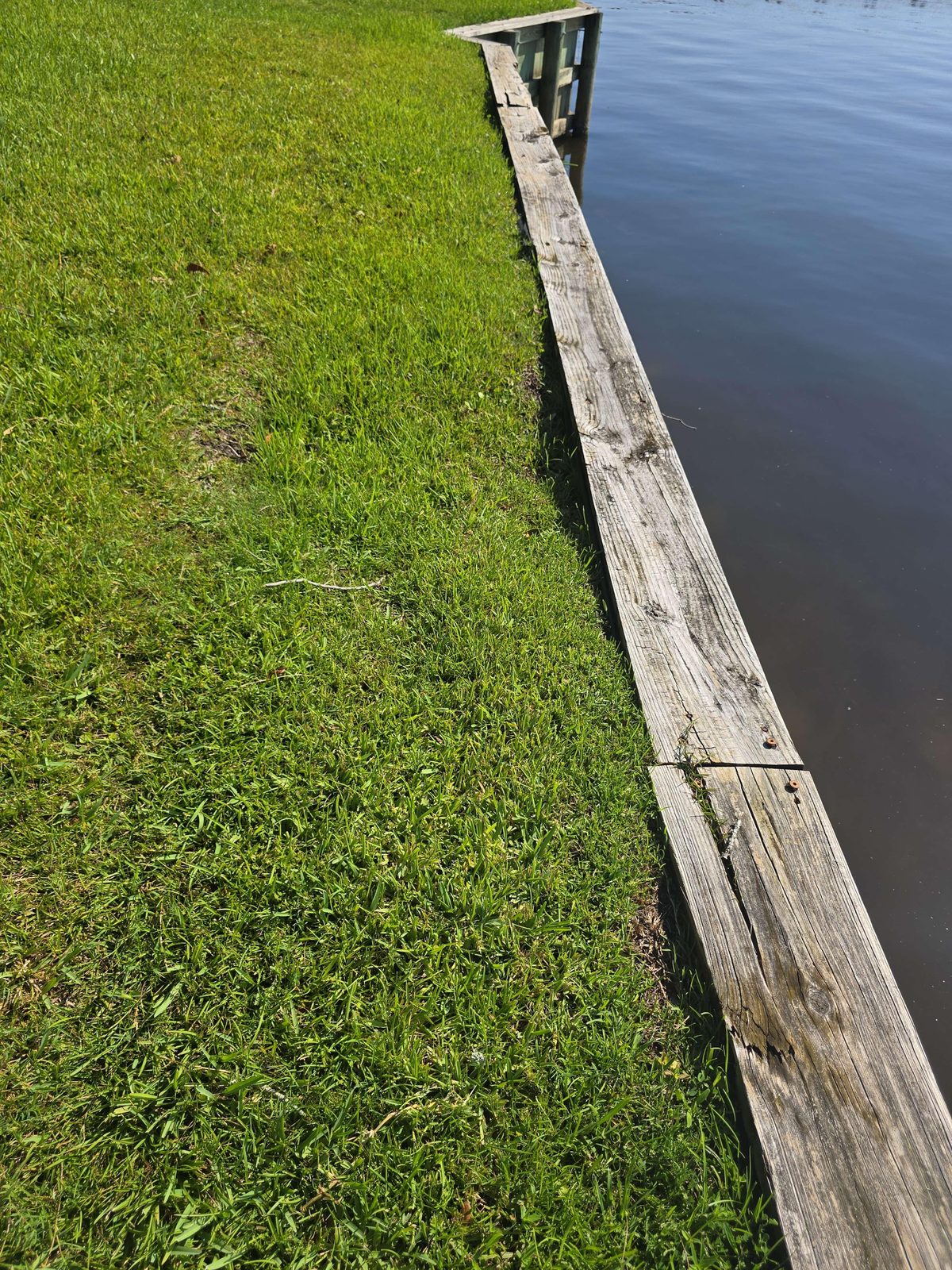
The rear bulkhead shows erosion, backing fasteners, and wood splitting along the grain
What we found
At the rear of the property near the bulkhead — the retaining wall that holds soil back from the water — we observed erosion (soil wearing away) at localized spots along its base. The fasteners, meaning the bolts or screws that hold the bulkhead together, were backing out of their seated positions rather than sitting flush. The surface of the wood also showed weathering and splitting along the grain.
Why it happens here
Timber bulkheads in coastal and waterfront settings face a demanding environment: repeated moisture exposure, salt, and soil movement all work on the wood and hardware over time. Fastener back-out and grain splitting are recognized signs of material fatigue — the gradual breakdown that comes with years of those conditions.
What it means for you
A bulkhead's job is to hold the shoreline in place. When fasteners loosen and wood splits, the wall's ability to do that work is reduced. Erosion at the base adds to the stress on the structure. A qualified eye is needed to judge how far this has progressed.
What to do
Have a qualified marine or waterfront contractor evaluate the erosion, the fastener condition, and the wood deterioration. They can determine what repairs or stabilization measures are appropriate for the specific conditions here.
How common is this
Weathering, fastener back-out, and erosion at timber bulkheads are common findings on waterfront properties — this type of wear is a normal part of the maintenance picture for any home on the water.
A conversation with a waterfront contractor will give you a clear picture of where things stand and what, if anything, needs attention before or after closing.
Curious what's on record for a specific address?
Look it up on PermitSearch → (opens in a new tab)Ready to book your own inspection?
Schedule an inspection →