
The hall bathroom walls are holding more moisture than they should
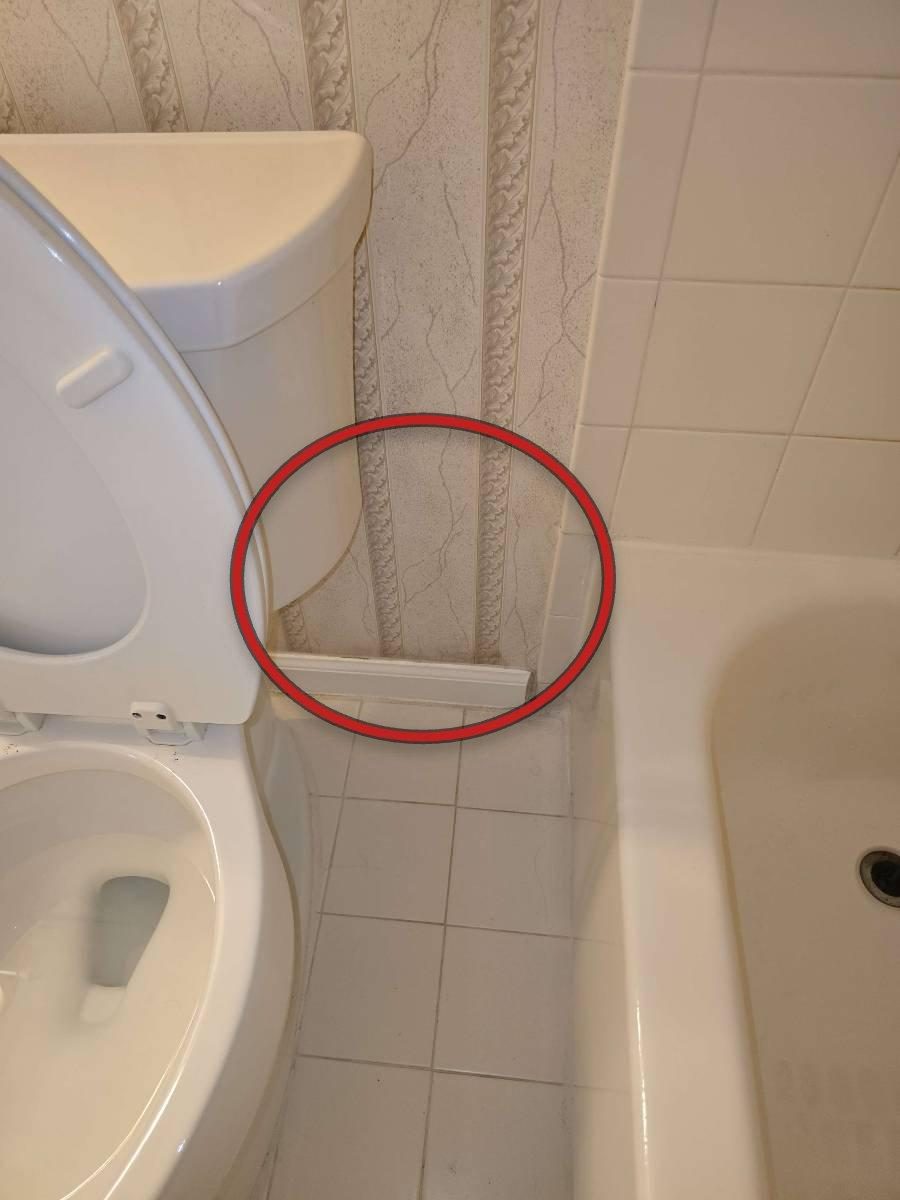
What we found
During the inspection, a moisture meter — a tool that reads how much water is held inside a building material — detected elevated moisture levels in the drywall next to the bathtub and partially behind the toilet in the hall bathroom.
Why it happens here
Drywall is the panel material used to form interior walls; it is not designed to hold water, and when it does, it loses structural strength and can no longer do its job of supporting finishes and protecting the framing behind it. Wall framing — the wooden structure that holds the walls up — and the metal fasteners that tie it together are both vulnerable when surrounded by persistent moisture. Microbial or fungal growth, meaning mold or mildew, can develop inside a wall cavity where it is not visible from the surface.
What it means for you
The readings confirm moisture is present inside the wall now. What lies behind the finished surface — the extent of any effect on framing or fasteners — cannot be seen without opening the wall, which is why a contractor evaluation is the next step.
What to do
Have a licensed plumbing contractor or general contractor examine the bathroom. They will look for the source of the moisture — which could involve caulking or grout at the tub surround, the seal at the base of the toilet, or plumbing connections — assess what is behind the wall, and carry out whatever repairs are needed.
How common is this
Moisture readings in bathroom walls are something inspectors specifically look for, and a contractor evaluation followed by targeted repairs is a routine response.
Getting a contractor in to trace the source is the straightforward next move, and it puts you in control of the information before you close.
Curious what's on record for a specific address?
Look it up on PermitSearch → (opens in a new tab)Ready to book your own inspection?
Schedule an inspection →