
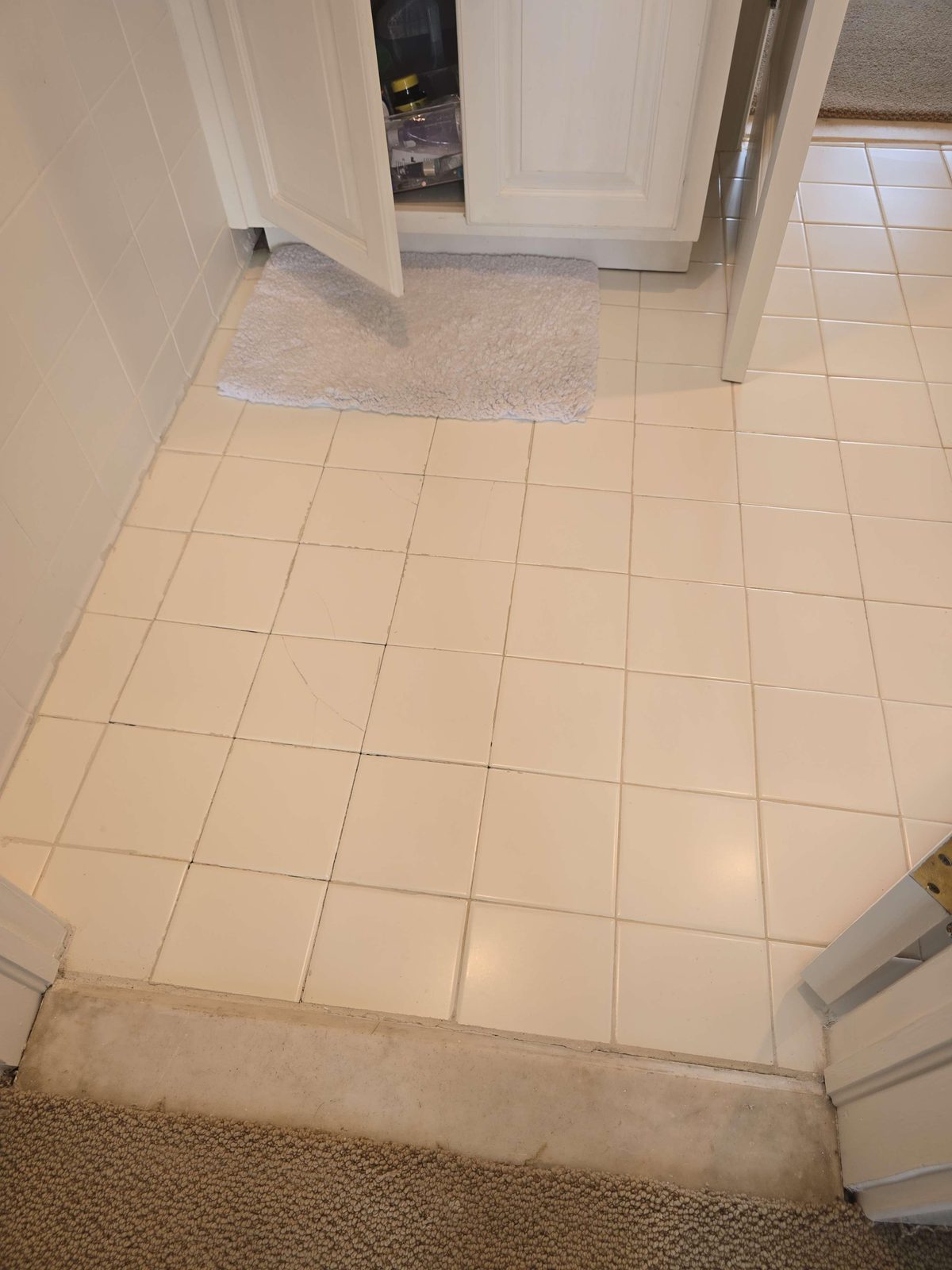
Cracked tiles and open grout joints on an upstairs bathroom floor caught our attention
What we found
In the upstairs Jack and Jill bathroom — a bathroom shared between two bedrooms, each with its own door — the tile floor showed cracking across the tile surface itself, open grout joints (the filled lines between tiles) at several locations, and a floor surface that was not level.
Why it happens here
Tile is a rigid finish material, meaning it does not flex. It is bonded to the floor structure below, so when that structure shifts or moves, the tile is among the first places that movement becomes visible — as cracks through the tile or gaps opening in the grout joints. An unlevel surface adds to the picture, because it tells you the floor plane itself has changed shape in some way. Together, these three conditions — cracking, open joints, and unlevel surface — can indicate that parts of the floor structure have moved differently from one another, a condition called differential settlement.
What it means for you
These observations, taken together, may point to movement in the floor framing below the bathroom. A structural contractor or engineer would need to look beneath the finished surface to understand what the floor framing looks like and whether anything needs attention.
What to do
Have a qualified structural contractor or licensed structural engineer evaluate the floor structure beneath this bathroom to determine whether any corrective work is needed.
How common is this
Inspectors routinely look for tile cracking and grout joint separation as indicators of floor movement, and this combination is something they are trained to flag for further professional review.
Bringing in a structural professional before closing gives you a clear picture of what is happening beneath that floor — and what, if anything, to do about it.
Curious what's on record for a specific address?
Look it up on PermitSearch → (opens in a new tab)Ready to book your own inspection?
Schedule an inspection →