
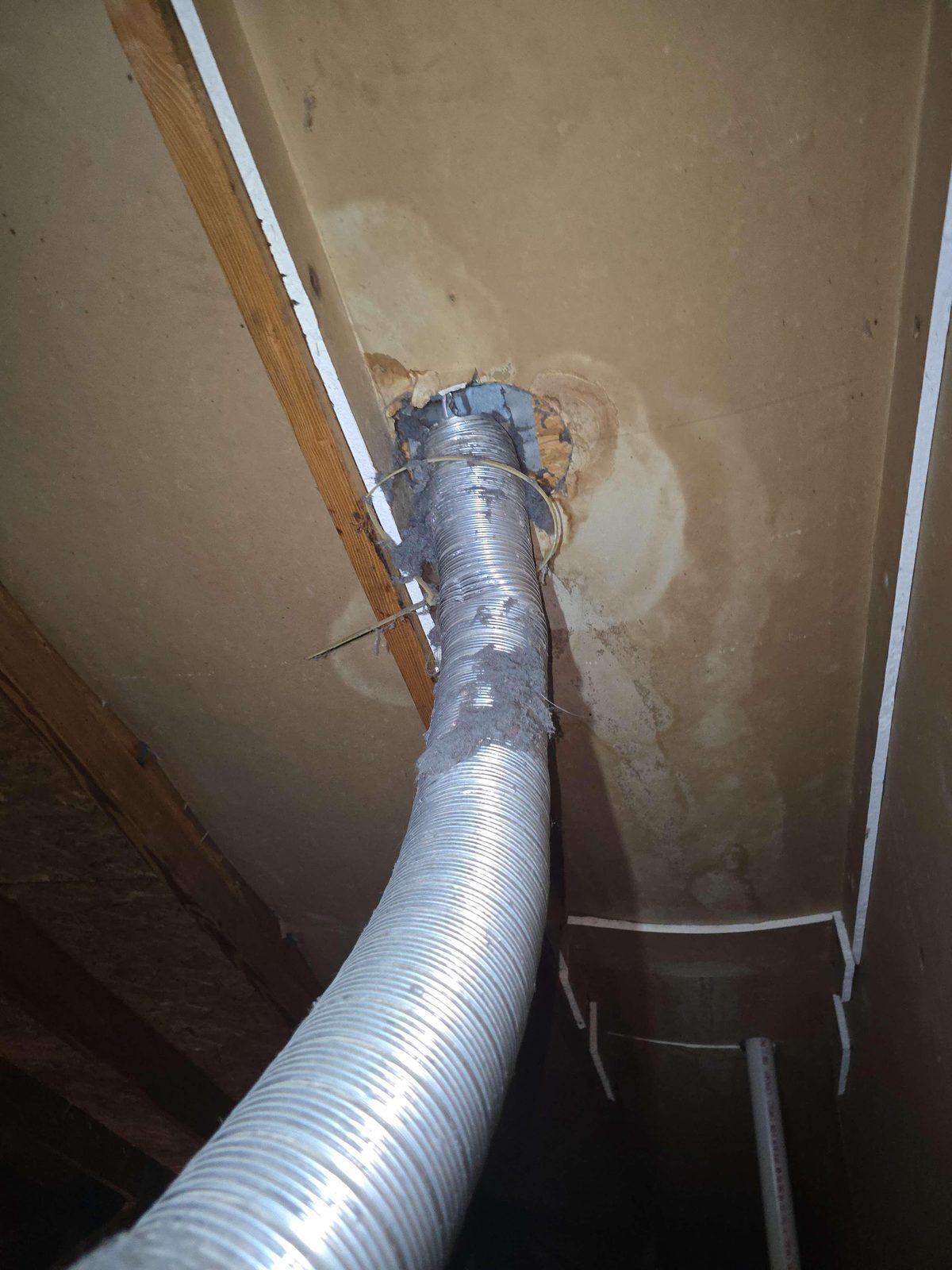
The dryer duct ends inside the attic instead of at the roof vent
What we found
The clothes dryer exhaust duct — the metal pipe that carries hot, lint-laden air away from the dryer — was observed ending inside the attic rather than connecting to the exhaust opening at the roof exterior. Lint is a combustible material.
Why it happens here
A dryer exhaust duct is designed to carry heat, moisture, and lint in one continuous path from the dryer to the outside of the building. When the duct ends inside an enclosed space instead, the heat and moisture discharge into that space, and combustible lint builds up on surrounding surfaces — conditions that work against the job the duct is meant to do.
What it means for you
Dryer exhaust discharging into an attic introduces heat, moisture, and combustible lint into an enclosed space. That combination presents an elevated fire risk and creates conditions favorable to microbial growth — the kind of biological buildup that can affect wood framing and insulation.
What to do
Have a qualified contractor evaluate the duct routing and connect it properly to the exterior roof termination so exhaust exits the building entirely. Aim to have this done before your inspection contingency expires.
How common is this
Inspectors look for dryer duct termination as a standard part of every inspection, and correcting the duct path to the exterior is a well-understood repair for contractors.
Getting the duct connected to the exterior vent is a defined, completable task — the right contractor will know exactly what it involves.
Curious what's on record for a specific address?
Look it up on PermitSearch → (opens in a new tab)Ready to book your own inspection?
Schedule an inspection →