
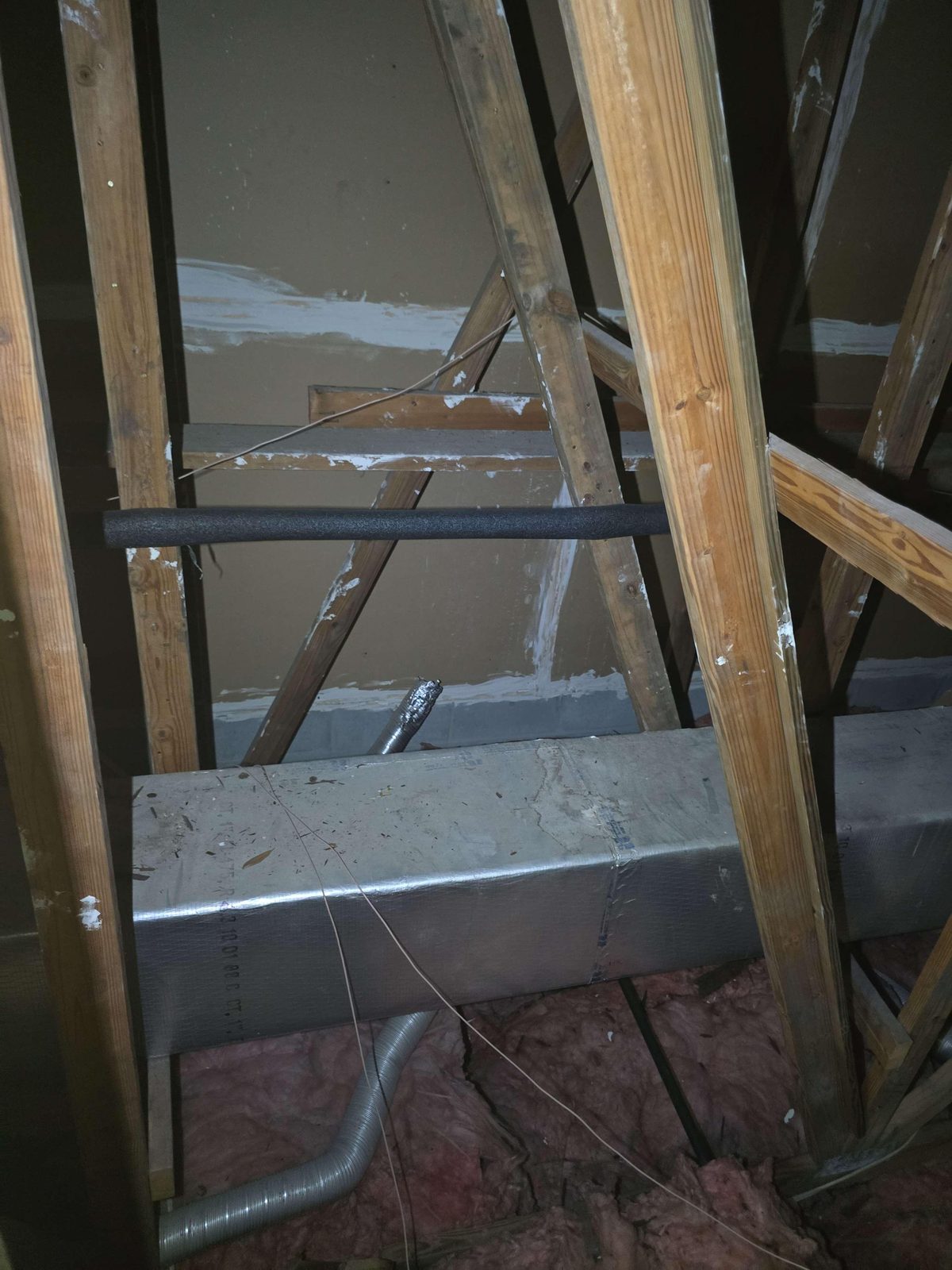
The exhaust vents in this attic discharge into the attic instead of outside
What we found
The exhaust vents — the ducts that carry humid air out of the home — were observed ending inside the attic rather than passing through to the outside of the building.
Why it happens here
Exhaust vents exist to carry warm, moisture-laden air completely out of the building. When a vent terminates inside an enclosed attic space rather than at the exterior, the moist air it carries is deposited into that enclosed space instead of being expelled. Attics are not designed to handle that kind of moisture load, so the air has nowhere useful to go.
What it means for you
Warm, moist air accumulating in an enclosed attic space can raise humidity levels there, which puts the insulation and wood structure in that space under conditions they are not meant to handle.
What to do
A licensed mechanical or general contractor can evaluate the venting and reroute each duct so that it terminates properly at the exterior of the building, which is the accepted standard for this type of installation.
How common is this
This is something inspectors specifically look for on every inspection, and rerouting exhaust vents to the exterior is a well-understood, routine repair for a qualified contractor.
Getting this routed to the outside is a straightforward job for the right contractor, and it brings the venting in line with how it is meant to work.
Curious what's on record for a specific address?
Look it up on PermitSearch → (opens in a new tab)Ready to book your own inspection?
Schedule an inspection →