
Elevated moisture showed up inside a bedroom wall below a window — here's what that means for you
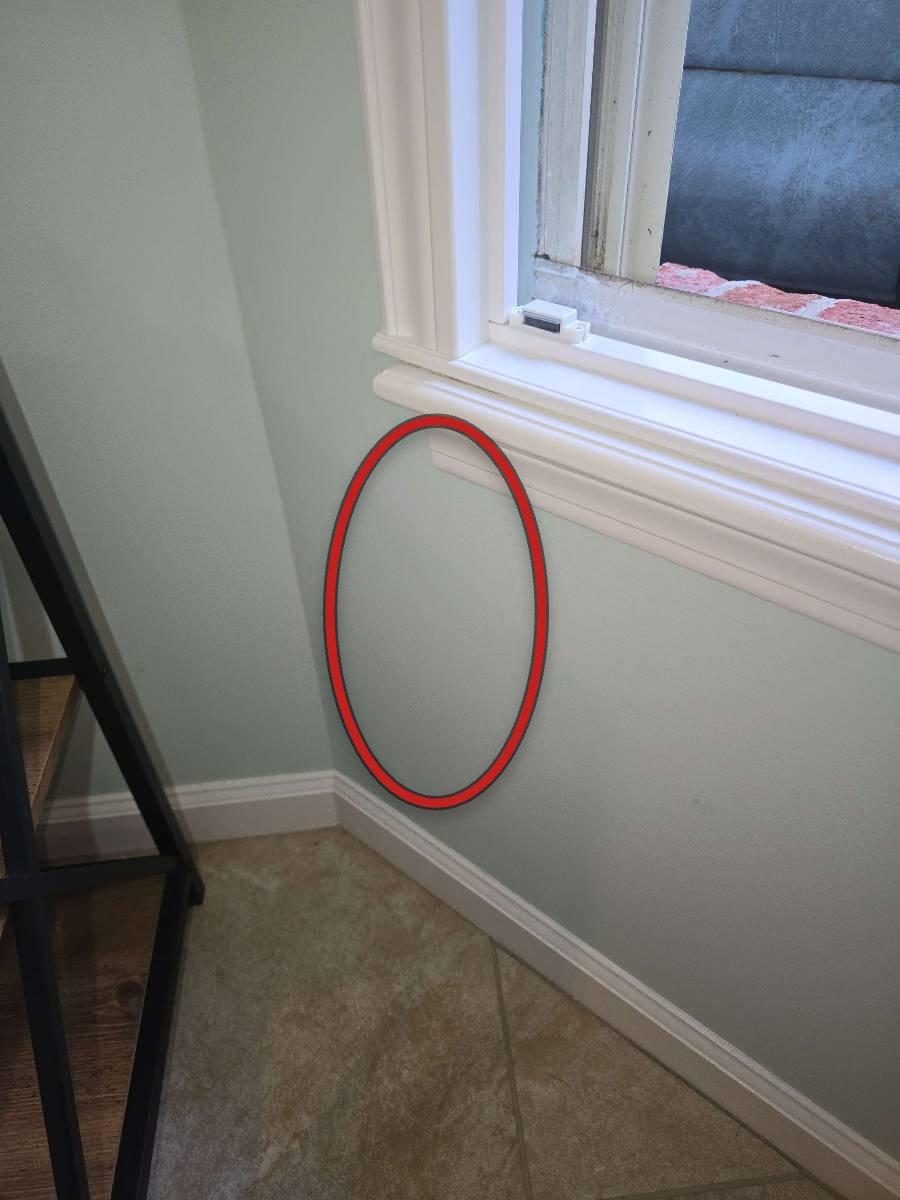
What we found
A moisture meter showed elevated moisture content inside the drywall beneath the window in the right rear corner of the left rear bedroom. Outside, the brick veneer — the outer layer of brick attached to the face of the house — had visible cracking in the mortar joints, the hardened material that fills the gaps between bricks, directly above that same area. Along the side and bottom edges of the window frame, there was evidence of previous sealing or caulking, meaning someone had already applied a waterproof sealant at some point.
Why it happens here
Drywall is a paper-faced gypsum panel used to form interior walls; it is not designed to hold up when wet, and neither is the wood framing behind it. Mortar joints in a brick veneer act as one line of defense against water reaching the wall interior; when they crack, that defense is weakened. Window frames are sealed at their edges to keep water out, but sealants are a surface-level barrier — if water finds a way past cracked mortar above and a compromised seal at the frame, it can work its way into the wall cavity where it is not visible from inside.
What it means for you
Moisture measured inside a wall assembly is a signal that the wall materials — drywall, framing, and anything else in that cavity — may have been exposed to water. The extent of any effect on those materials is not visible from the finished surface alone, which is why the finding calls for opening up the wall to look.
What to do
Before your inspection contingency — the agreed deadline by which you can request repairs or walk away — expires, have a qualified contractor evaluate this area. That evaluation should include partial disassembly of the wall so the contractor can see the substrate (the structural materials behind the drywall), confirm where the water is coming from, and assess how far the affected area extends.
How common is this
Inspectors routinely check moisture levels at walls near windows and exterior masonry — brick and similar materials — because these are areas worth examining carefully. Identifying the source and making the necessary repairs is a well-understood type of work for experienced contractors.
Getting a contractor's eyes inside that wall before your contingency deadline is the most important next step you can take.
Curious what's on record for a specific address?
Look it up on PermitSearch → (opens in a new tab)Ready to book your own inspection?
Schedule an inspection →