
The fasteners holding the roof-to-wall connectors in place appear to be the wrong type for the job
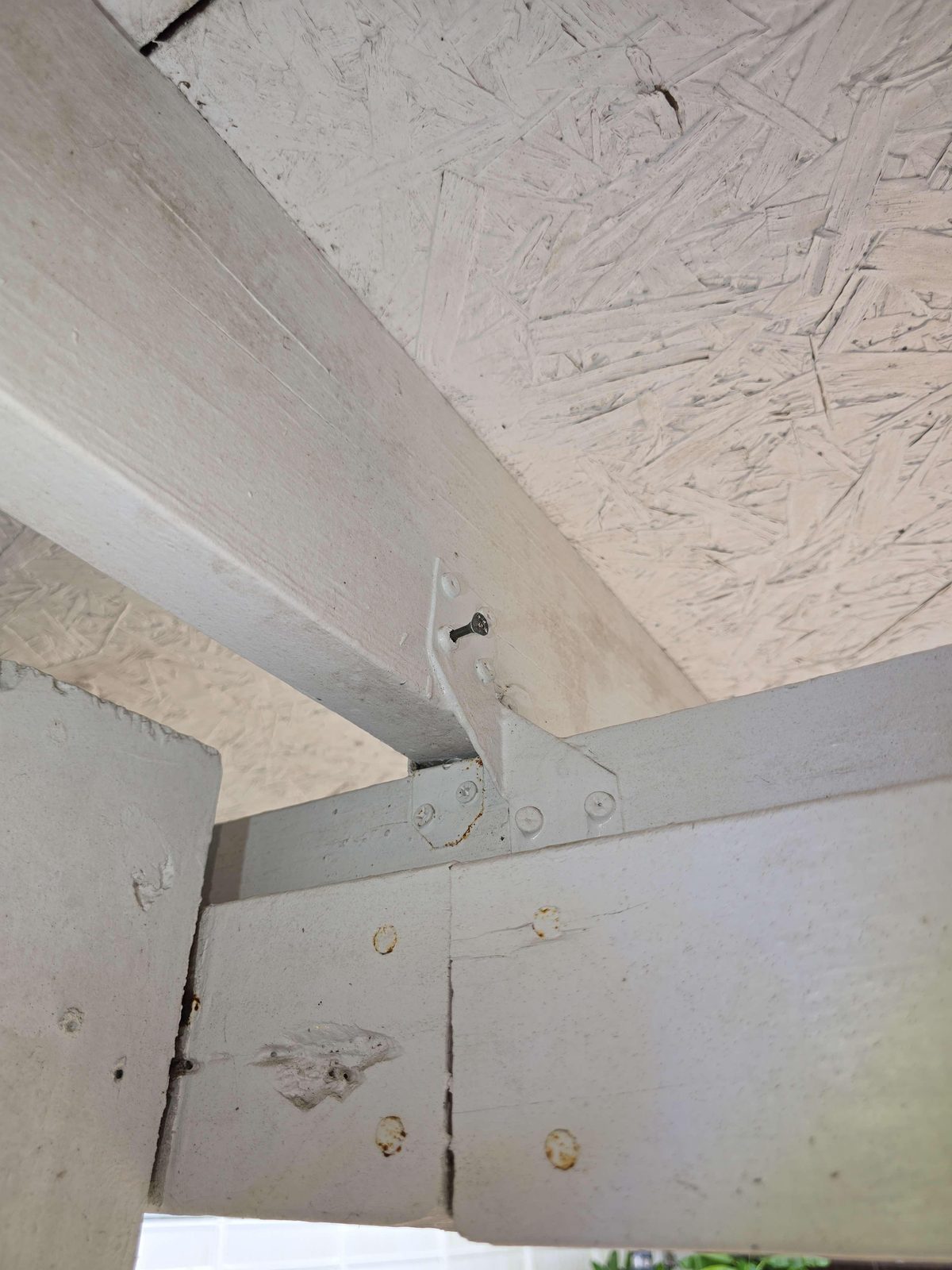
What we found
At the roof-to-wall connection — the point where the roof framing meets the top of the exterior walls — metal hurricane strap connectors (also called uplift connectors) were present. The fasteners securing those straps had shaft diameters that appeared characteristic of drywall or deck screws rather than the structural nails or screws called for by the connector specifications.
Why it happens here
Hurricane straps are metal connectors engineered to transfer uplift force — the upward pulling load that wind places on a roof — from the roof framing down into the wall framing. The connector can only move that force if its fasteners are strong enough to hold. Connector manufacturers publish load ratings that are valid only when a specific fastener type, diameter, and quantity are used. Drywall and deck screws have narrower shafts than structural fasteners, and a narrower shaft carries less shear load — the sideways force that acts on a fastener when the roof tries to lift away from the wall.
What it means for you
If the fasteners do not meet the connector's specifications, the assembly may not perform at the load level it was designed for. A licensed structural contractor or engineer can determine exactly what is present and what, if anything, needs to change.
What to do
Have a licensed structural contractor or structural engineer evaluate the fastener type, diameter, and installation pattern at these connections against the connector manufacturer's specifications. Any fasteners found to be non-conforming can be replaced with the correct type at that time.
How common is this
Inspectors routinely examine roof-to-wall connections and the fasteners used at structural connectors — it is a standard part of a structural review, and correction by a qualified contractor is a well-understood repair.
Getting a structural contractor or engineer to take a close look will give you a clear picture of what the connections need.
Curious what's on record for a specific address?
Look it up on PermitSearch → (opens in a new tab)Ready to book your own inspection?
Schedule an inspection →