
A floor joist was notched for plumbing and the repair next to it was fastened with the wrong kind of screws
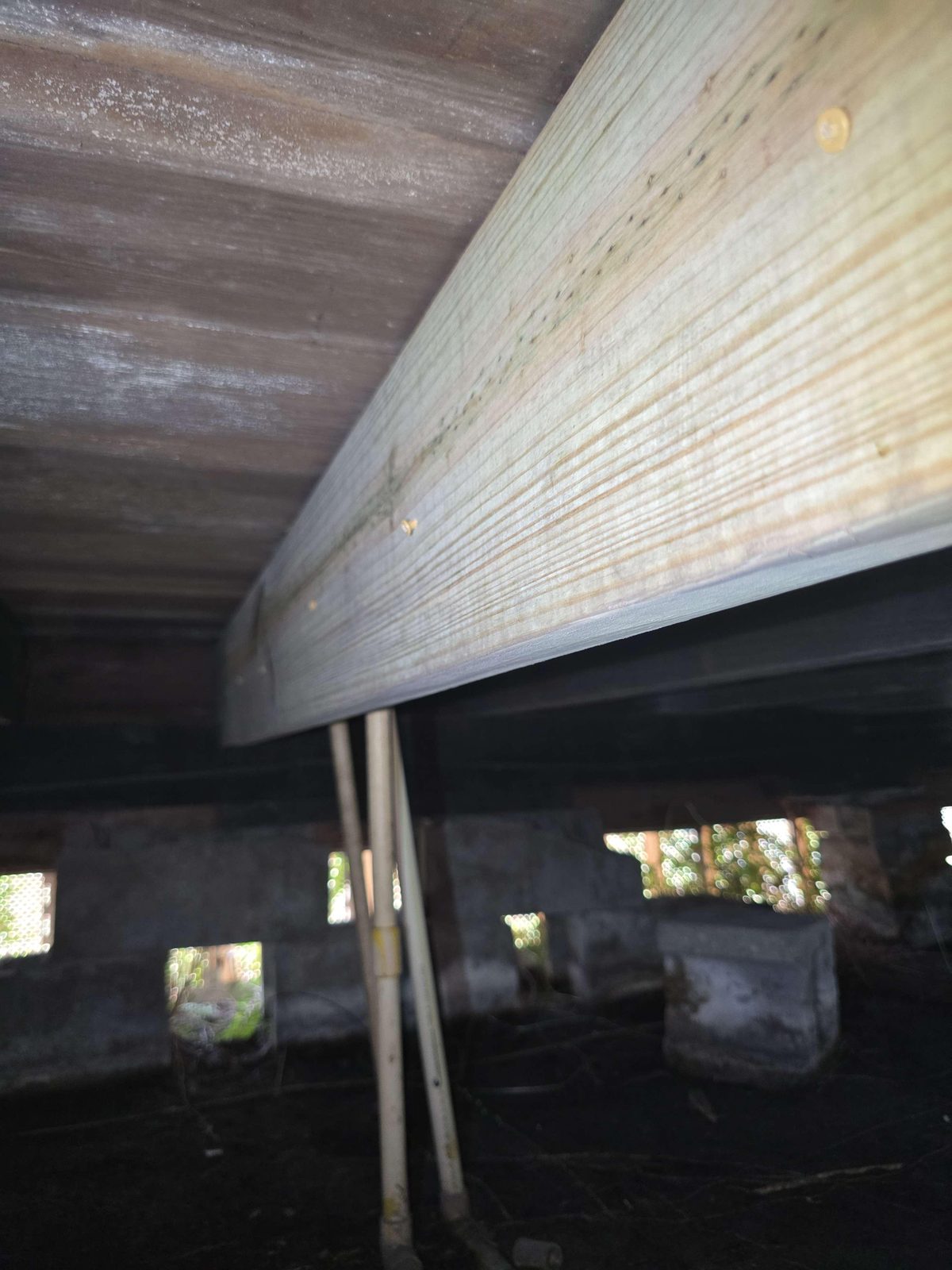
What we found
In the crawlspace—the shallow, unfinished space beneath the living area—one floor joist, a horizontal timber that carries the weight of the floor above, had been notched or cut to make room for plumbing supply pipes. A sister joist, meaning a second joist placed tight against the first to restore its strength, had been installed alongside it. The sister joist was fastened using deck screws only.
Why it happens here
Floor joists are designed to carry load from above and transfer it to the foundation. When a joist is notched or cut, some of that carrying capacity is reduced. A sister joist is the standard way to address that: the idea is that the new member picks up what the modified one can no longer handle on its own. For that to work, the two members have to be solidly connected. Structural fasteners—specific nails or engineered metal connectors—are designed and tested to resist the sideways and withdrawal forces that floor framing experiences. Deck screws are not rated for those forces, so the connection between the sister and the original joist may not transfer load the way a proper structural connection would.
What it means for you
The sistered joist is in place, but whether it is doing its intended job depends on the fasteners holding it, and those fasteners are not the type rated for this use. A licensed structural contractor or engineer can look at the member, assess the connection, and tell you what, if anything, needs to change.
What to do
Have a licensed structural contractor or structural engineer evaluate the notched joist, the sister joist, and the fastening used. If corrective work is needed, the repair should use properly rated structural fasteners or approved hardware.
How common is this
Inspectors routinely look at crawlspace framing, and sistered joists are a repair method they see and report on regularly. Getting the fastening confirmed by a contractor is a straightforward next step.
Your inspector flagged this so you can get the right eyes on it before closing—a structural contractor or engineer can give you a clear answer on what the fix looks like.
Curious what's on record for a specific address?
Look it up on PermitSearch → (opens in a new tab)Ready to book your own inspection?
Schedule an inspection →