
The water heater's safety valve has a discharge pipe that runs upward before it exits
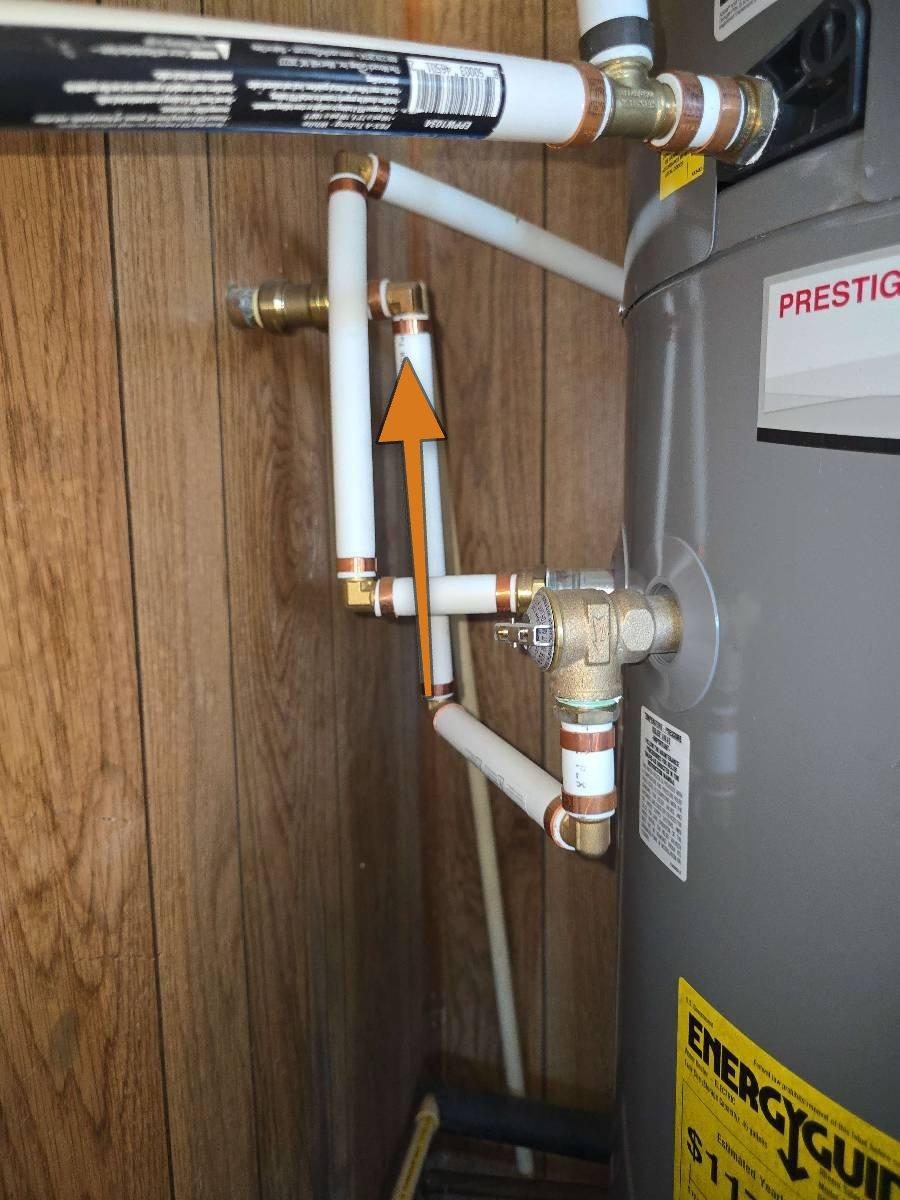
What we found
The discharge pipe connected to the water heater's temperature and pressure relief valve — the TPRV, a small valve on the side of the tank — was observed running upward at some point along its path before it exits. For that pipe to do its job, water needs to be able to flow out freely; running upward means it has to work against gravity to get there.
Why it happens here
A TPRV is a safety valve: when pressure or temperature inside the water heater climbs too high, the valve opens and releases water through that discharge pipe to relieve the stress. Gravity is what moves that water along. When the pipe is routed so that water must travel uphill before it can exit, the flow is resisted rather than assisted, and the valve's ability to discharge quickly and fully is reduced.
What it means for you
The discharge pipe is there specifically so the TPRV can do its job without restriction. A pipe configured to run upward works against that purpose and may impede or limit the valve's ability to release pressure and temperature as intended.
What to do
A licensed plumbing contractor can evaluate the current routing and correct it so the discharge pipe runs continuously downward from the valve to an appropriate termination point — the standard installation practice for this type of pipe.
How common is this
TPRV discharge piping is something inspectors look at on every water heater, and corrections to the routing are a routine plumbing repair.
If you have questions about what the inspector observed, your TrueHome report includes the original photos and notes — a good starting point before you talk to a plumber.
Curious what's on record for a specific address?
Look it up on PermitSearch → (opens in a new tab)Ready to book your own inspection?
Schedule an inspection →