
The primary bedroom's exterior walls showed elevated moisture readings confirmed by two meters, with plaster crumbling at the probe and rot visible at the window trim — all hidden behind intact wallpaper
What we found
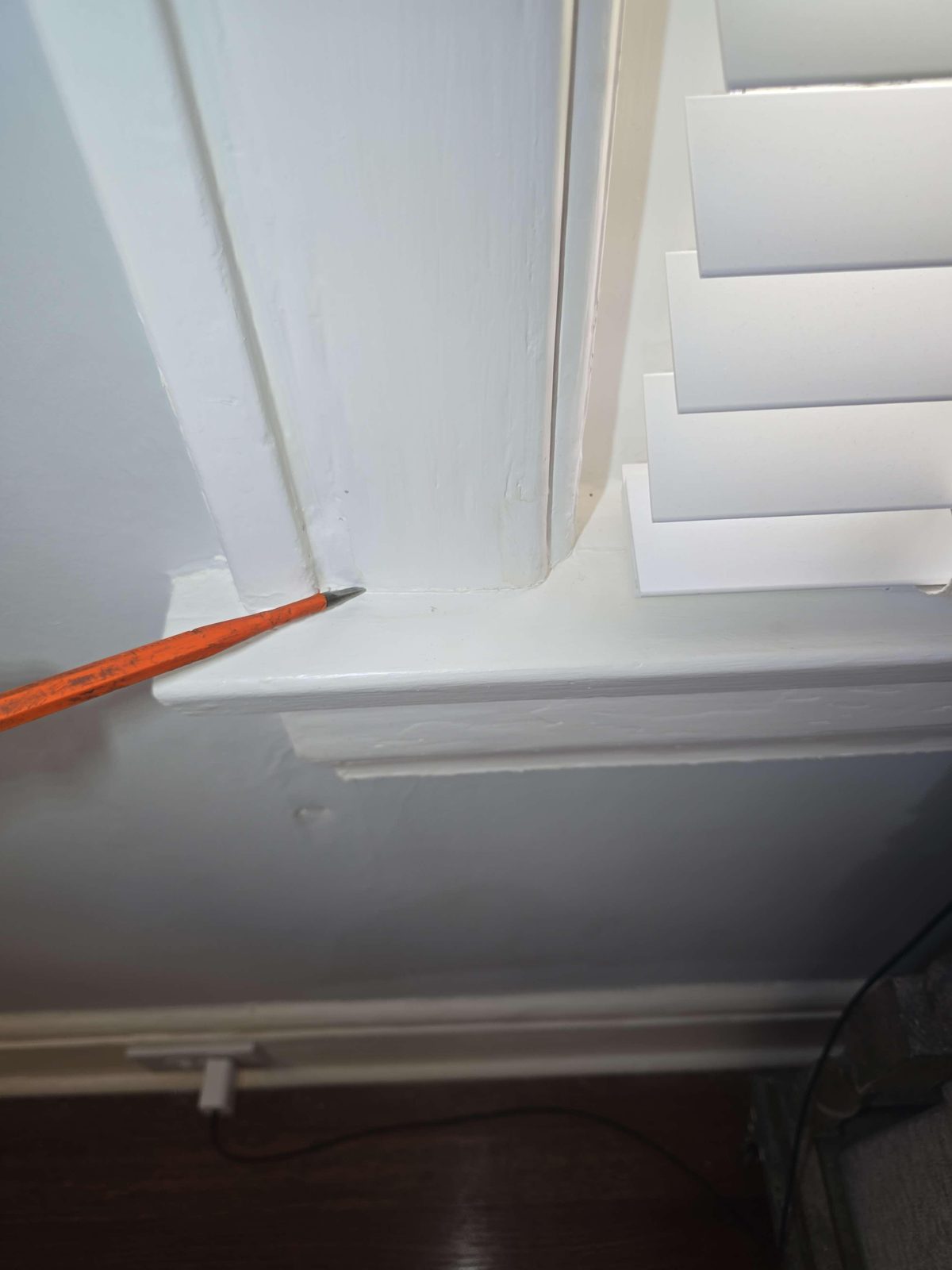
Every exterior (perimeter) wall in the second-floor primary bedroom returned elevated moisture readings on a non-contact meter and again on a contact pin meter, which uses small pins pressed directly into the surface. As a control, we tested interior partition walls elsewhere in the house — finished with the same vinyl wallpaper — and those read dry. That rules out the wallpaper or the plaster itself as the source; the moisture is inside the wall assembly. When the pin probe touched the plaster on these exterior walls, the plaster crumbled under very little pressure, which is physical evidence of material breakdown, not just a meter reading. We also observed localized rot — wood softened and degraded by sustained moisture — on the interior window trim in this room. None of this is visible to the eye: the wallpaper is intact and the room looks sound.
Why it happens here
This house has brick veneer — a decorative outer layer of brick — on a hot, humid climate site. Brick absorbs rainwater and holds it. When the sun heats that wet brick, moisture is pushed inward, toward the cooler, air-conditioned interior. Vinyl wallpaper on the interior face of the wall acts as a vapor barrier — a layer that resists moisture movement — but it is on the wrong side for this direction of moisture flow. Moisture that enters the wall cannot escape through the vinyl, so it accumulates at the plaster surface behind the paper. Over time, sustained moisture at that surface deteriorates plaster and decays wood.
What it means for you
The crumbling plaster and rotted window trim are physical signs that moisture has been present and active in these walls. The damage is concealed behind wallpaper that appears undamaged, so its full extent is unknown from what was visible at inspection. Because the same wall assembly — brick veneer, plaster, vinyl wallpaper — is a condition of the whole house, other rooms with vinyl wallpaper on exterior walls share the same setup and the same potential for the same process to be occurring behind their paper as well.
What to do
Before your inspection contingency — the deadline in your contract to raise concerns — expires, have a qualified building contractor or moisture-remediation contractor evaluate this. That evaluation should include opening a small section of wall covering at a low, inconspicuous spot to look directly at the plaster surface, assessing how far the plaster deterioration extends across all exterior walls in this room, identifying where the moisture is entering, and determining whether the vinyl wall covering needs to come off exterior walls before any refinishing is done. Repair of the rotted window trim should follow, not precede, correcting the moisture condition.
How common is this
Vinyl wall coverings on exterior walls are a well-documented source of concealed moisture damage in hot, humid climates, particularly with brick-veneer construction. The combination is common enough in certain building eras and regions that moisture professionals and building scientists treat it as a known pattern. The damage tends to be hidden for years because the wallpaper stays intact while the deterioration progresses behind it.
This is one of those findings where the room looks perfectly fine — and that is exactly what makes the meter readings and the crumbling plaster worth taking seriously before you close.
Curious what's on record for a specific address?
Look it up on PermitSearch → (opens in a new tab)Ready to book your own inspection?
Schedule an inspection →