
The outlet behind the range sits where you can't easily reach it — and that affects the safety bracket too
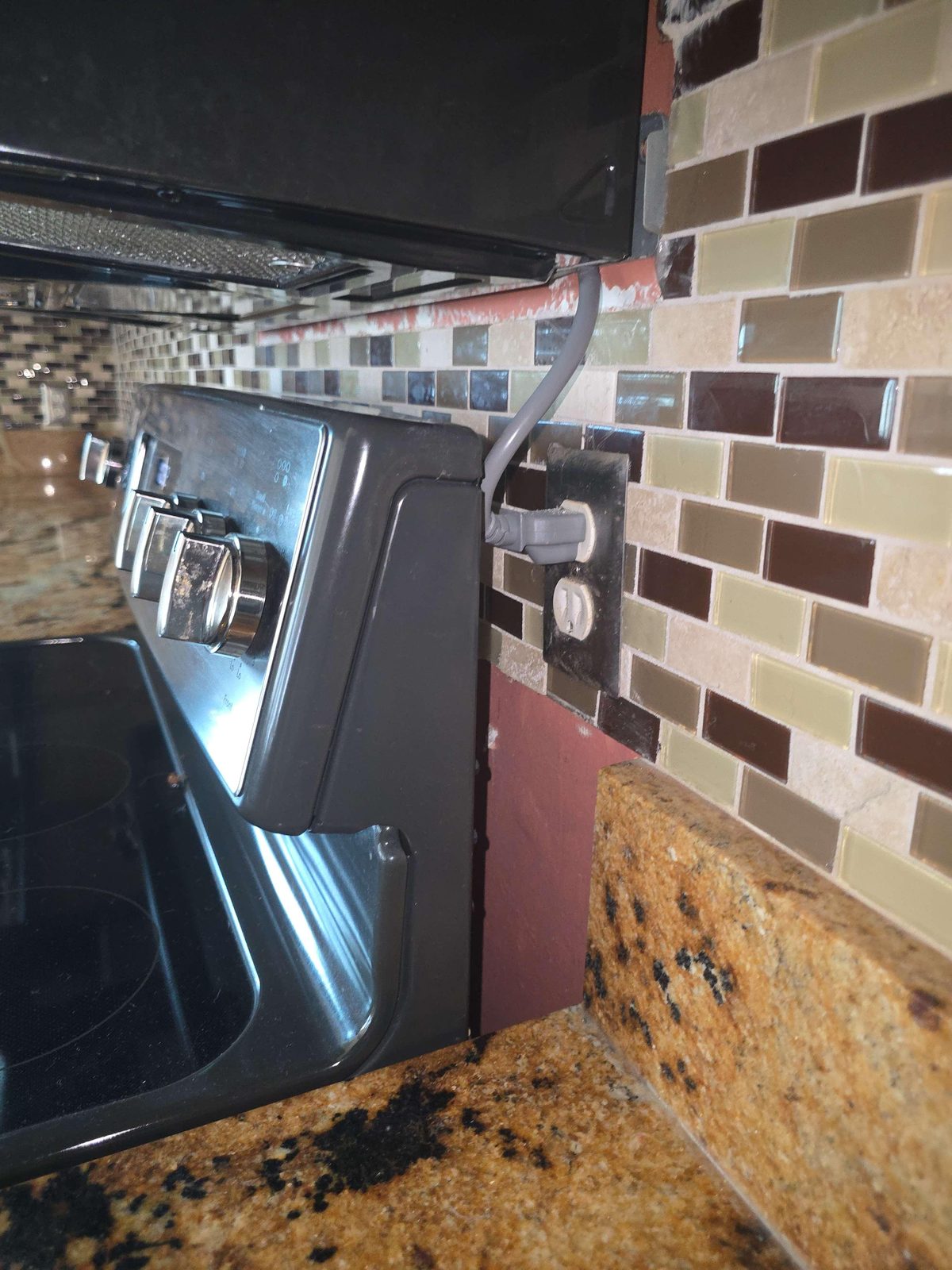
What we found
The electrical receptacle outlet — the standard wall plug — beside the range was observed sitting partially behind the appliance. That position makes it hard to reach, and it also interferes with the anti-tip bracket, the small device that anchors the rear of a freestanding range to keep it stable.
Why it happens here
A receptacle outlet is meant to be accessible so you can plug and unplug things without difficulty, and so it can be reached quickly if needed. An anti-tip bracket works by gripping one of the range's rear legs; if something blocks that connection, the bracket cannot do its job. When the outlet position prevents the bracket from engaging properly, both the outlet and the bracket are compromised at the same time.
What it means for you
An outlet you cannot easily reach is inconvenient to use and harder to get to when you need to. An anti-tip bracket that is not fully engaged means the range is less resistant to tipping forward — for example, if someone opens the oven door and applies downward pressure on it.
What to do
Have a qualified electrician and an appliance technician evaluate the situation together. The goal is to move the outlet to a location that is freely accessible and that allows the anti-tip bracket to seat properly against the range's rear leg.
How common is this
Inspectors routinely check outlet placement near appliances and verify that anti-tip brackets are engaged — both are standard items on an inspection. Repositioning an outlet is a routine electrical repair.
If you have questions about this finding before closing, it is a straightforward one to put to a licensed electrician for a quick opinion.
Curious what's on record for a specific address?
Look it up on PermitSearch → (opens in a new tab)Ready to book your own inspection?
Schedule an inspection →