
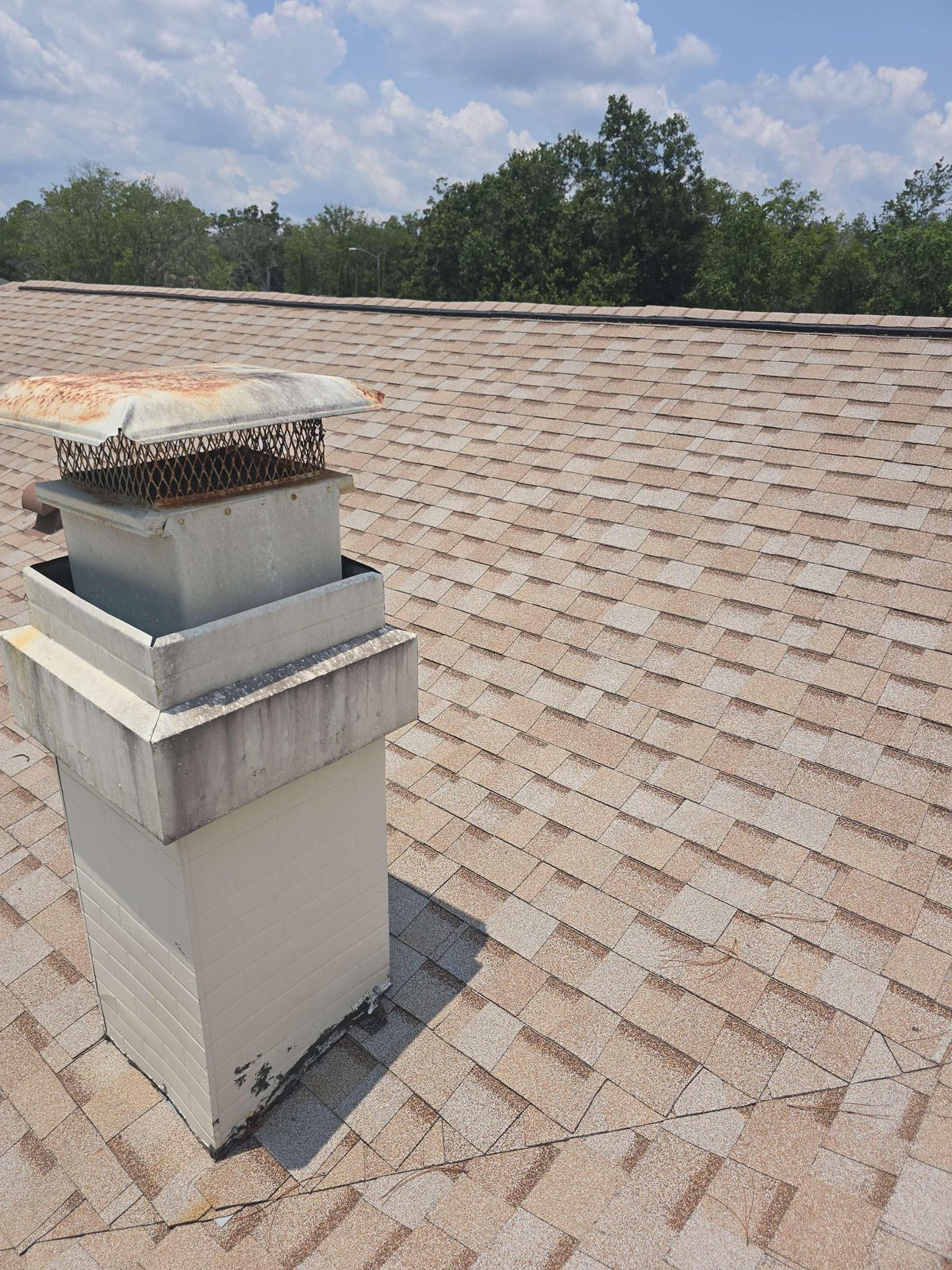
The chimney doesn't clear the roof by the margin the industry standard calls for
What we found
The chimney does not meet the height relationship known as the 2-3-10 rule. That guideline — referenced in NFPA 211 and most residential building codes — requires a chimney to extend at least 2 feet above any part of the roof within 10 horizontal feet of it, and at least 3 feet above the point where it passes through the roof surface. This chimney, as observed, does not satisfy those proportions.
Why it happens here
A chimney's job is to carry combustion gases — the byproducts of burning fuel — up and out of the living space. It does this by creating draft, which is the upward pull of warm air through the flue (the interior channel inside the chimney). Height relative to the surrounding roof matters because nearby roof surfaces and structures can interrupt airflow. When a chimney clears those surfaces by the standard margin, wind tends to pass over the top and draw gases upward; when it falls short of that margin, wind can press down into the flue instead, a condition called downdrafting.
What it means for you
A chimney that doesn't meet the height guideline may not draft as reliably. Downdrafting — where gases move down into the living space rather than up and out — is one possible result. A qualified chimney or masonry contractor can assess the specific conditions at this chimney and advise on what correction, if any, is needed.
What to do
Have the chimney evaluated by a qualified chimney or masonry contractor. They can measure the height relative to the roof and adjacent surfaces, compare it against the applicable standard, and recommend any correction needed to support safe and effective draft.
How common is this
Chimney height relative to roof surfaces is a standard item inspectors check and report. Bringing a chimney into compliance with the 2-3-10 guideline is a routine type of masonry work.
A conversation with a chimney or masonry contractor is the right next step — they can put eyes on the specific geometry and tell you exactly what the path forward looks like.
Curious what's on record for a specific address?
Look it up on PermitSearch → (opens in a new tab)Ready to book your own inspection?
Schedule an inspection →