

The outbuilding's electrical subpanel has its neutral and ground wires mixed together, with some neutrals sharing a single terminal
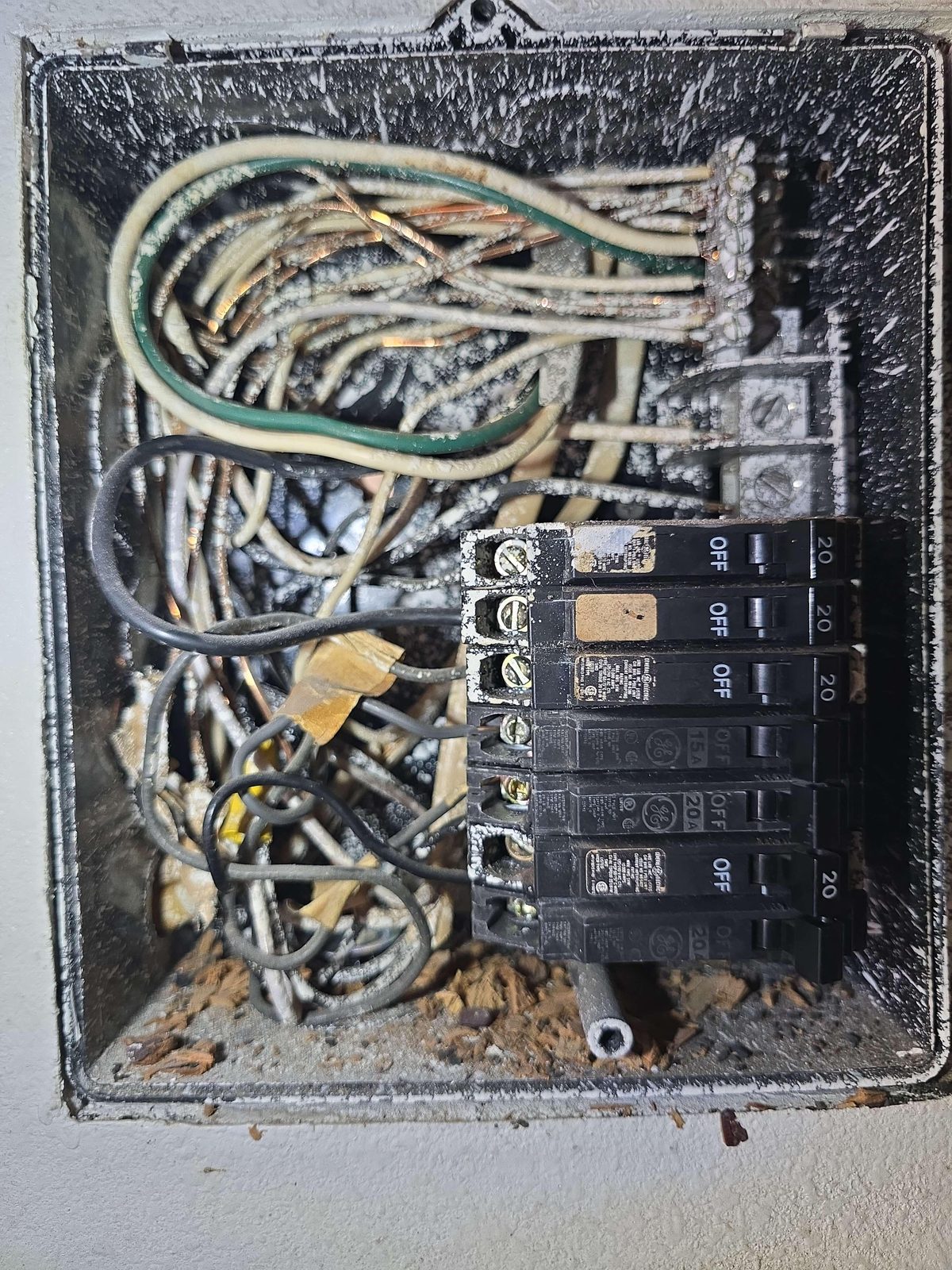
What we found
The load center — the electrical subpanel, meaning the secondary breaker box — serving the outbuilding had its neutral conductors (the return-current wires) and its ground conductors (the safety wires) connected together rather than kept on separate bars. Ground terminals were absent from the panel. Multiple neutral conductors were also found sharing a single terminal lug, a condition called double-tapped neutrals.
Why it happens here
A subpanel is a secondary distribution point that feeds a portion of the home's circuits from a main panel elsewhere. Unlike a main panel, a subpanel is required to keep its neutral bar and its equipment-grounding bar completely separate, so that normal return current travels only along the neutral path. When the two bars are bonded together in a subpanel, return current can travel on the grounding path, which those conductors are not designed to carry continuously. A terminal lug is sized and rated for a specific number of conductors; when two neutral wires share one lug, the connection can be loose or intermittent, which concentrates heat at that point.
What it means for you
Return current running on the grounding conductors reduces the reliability of the safety path those wires are meant to provide. A loose neutral connection at an overloaded terminal can cause localized overheating at that lug.
What to do
Have a licensed electrical contractor evaluate and correct the panel. The work involves separating the neutral and ground bars, installing proper grounding terminals, and landing each neutral conductor on its own dedicated terminal.
How common is this
Subpanel wiring is a standard part of every electrical inspection, and the corrections described here are routine work for a licensed electrician.
An electrician can bring this panel into order in a single visit, and your inspector can answer any questions about what was observed before you schedule the work.
Curious what's on record for a specific address?
Look it up on PermitSearch → (opens in a new tab)Ready to book your own inspection?
Schedule an inspection →