

The water heater's safety valve discharge pipe runs upward instead of down
What we found
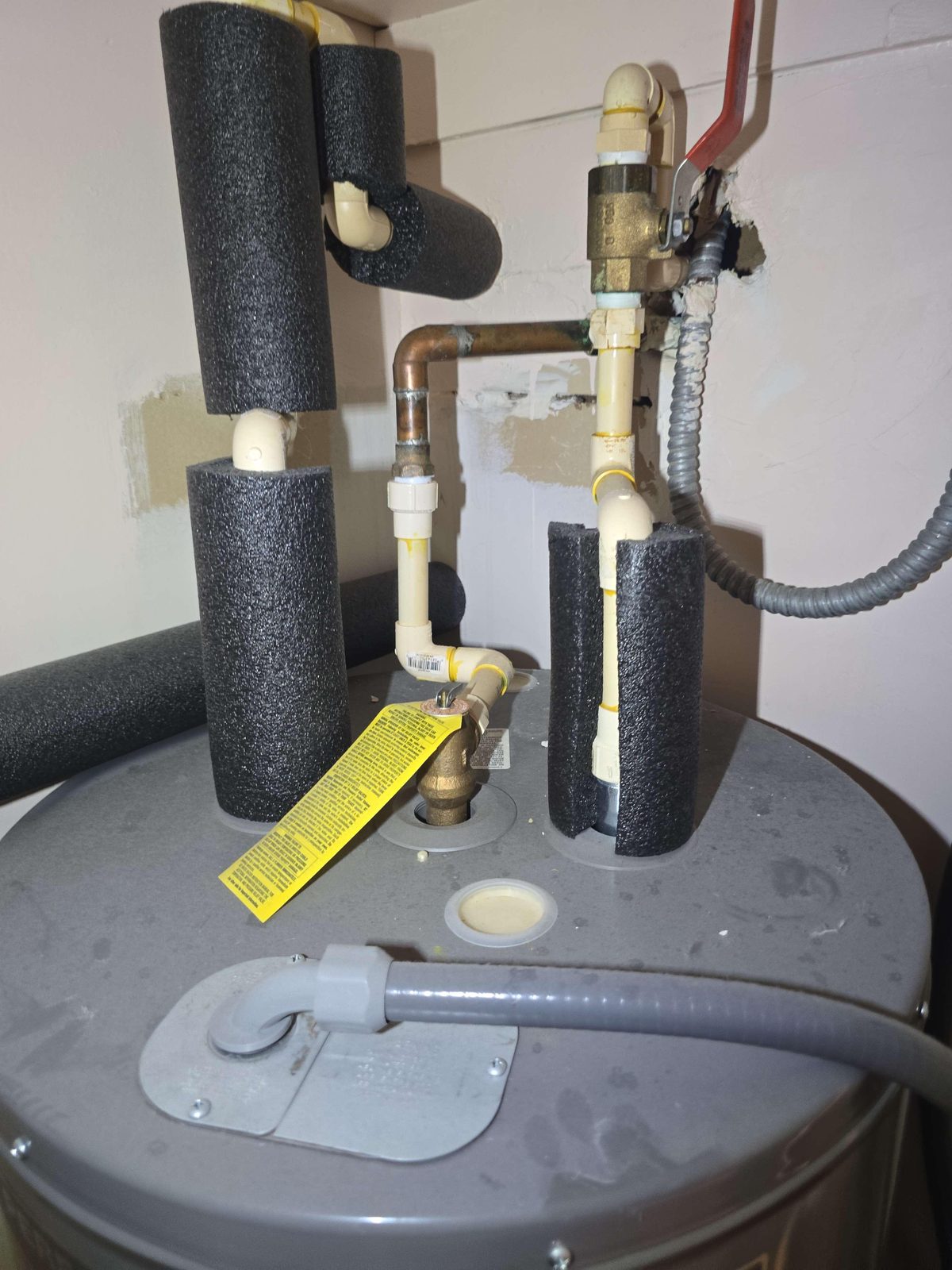
The discharge pipe attached to the water heater's temperature-pressure relief valve — the TPRV, a small valve on the side of the tank that opens automatically if pressure or temperature inside gets too high — was routed upward from the valve outlet rather than downward.
Why it happens here
A TPRV discharge pipe is designed to carry released water or steam away from people and down toward a safe termination point near the floor. That job relies entirely on gravity. A pipe that runs upward works against gravity, so anything discharged from the valve has nowhere to go except back toward the valve itself or outward at the connection point rather than safely downward.
What it means for you
If the valve were to open, the upward-routed pipe could direct hot water or steam toward occupants rather than away from them, and accumulated water sitting at the valve outlet could interfere with the valve's ability to operate as intended.
What to do
Have a licensed plumbing contractor evaluate and correct the discharge pipe routing so it runs downward and terminates near the floor or an appropriate drain point, in line with the water heater manufacturer's requirements and accepted industry practice.
How common is this
Discharge pipe routing is a standard item inspectors check at every water heater, and correcting the direction of a pipe is a routine plumbing repair.
A quick visit from a licensed plumber is all it takes to get this pipe running the right direction.
Curious what's on record for a specific address?
Look it up on PermitSearch → (opens in a new tab)Ready to book your own inspection?
Schedule an inspection →