
The insulated sleeve where the utility lines meet the house shows visible damage
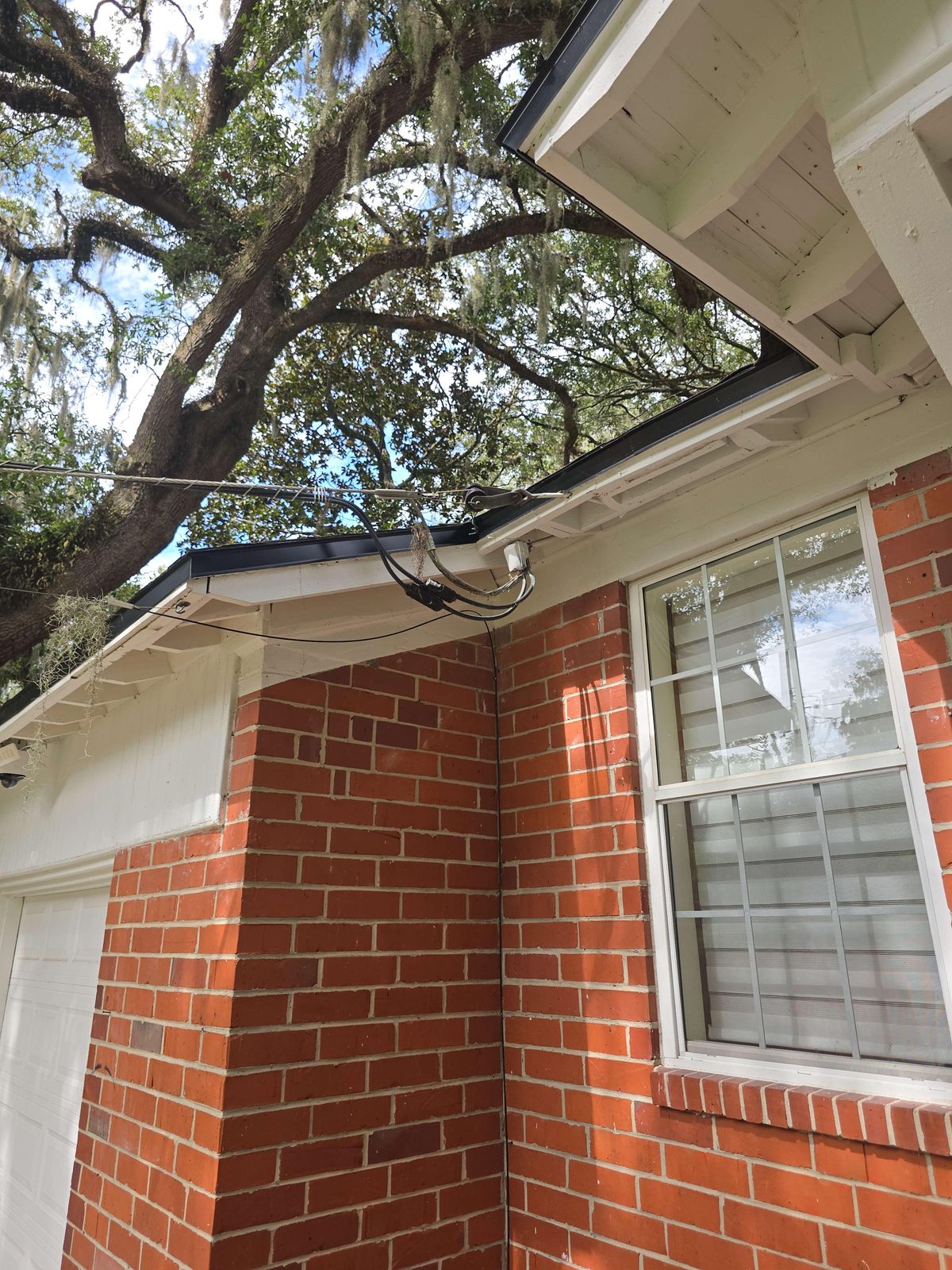
What we found
At the point where the utility's overhead wires meet the home's own electrical conductors—a junction called the service drop splice—the plastic insulated collar (the sleeve that wraps and protects the connection) showed visible deterioration and damage. The pattern of damage may be consistent with animal activity, though the specific cause was not confirmed during the inspection.
Why it happens here
Service drop splices sit outside, fully exposed to the elements and, in many areas, within reach of wildlife and rodents. Insulated connectors at this location are designed to keep weather and accidental contact away from energized wires, but that plastic material can be vulnerable to gnawing or pecking over time.
What it means for you
A damaged sleeve at this location leaves what appears to be an energized connection—a live electrical junction—with less protection than intended. That presents an elevated risk of electrical shock to anyone near it and, if combustible material were to come into contact with it, a potential ignition source.
What to do
Have the serving utility provider or a licensed electrical contractor evaluate and repair this connection. Because the service drop and its components typically fall under utility jurisdiction, they require specialized handling and access that goes beyond standard contractor work.
How common is this
Animal damage to service drop insulation is not unusual in areas with active wildlife or rodent populations. The location and exposure of these components make them a known target.
A call to your utility provider is the right first step—they can confirm jurisdiction and coordinate the repair.
Curious what's on record for a specific address?
Look it up on PermitSearch → (opens in a new tab)Ready to book your own inspection?
Schedule an inspection →