

Corner trim at a roof valley was cut in a way that redirects water toward the wall
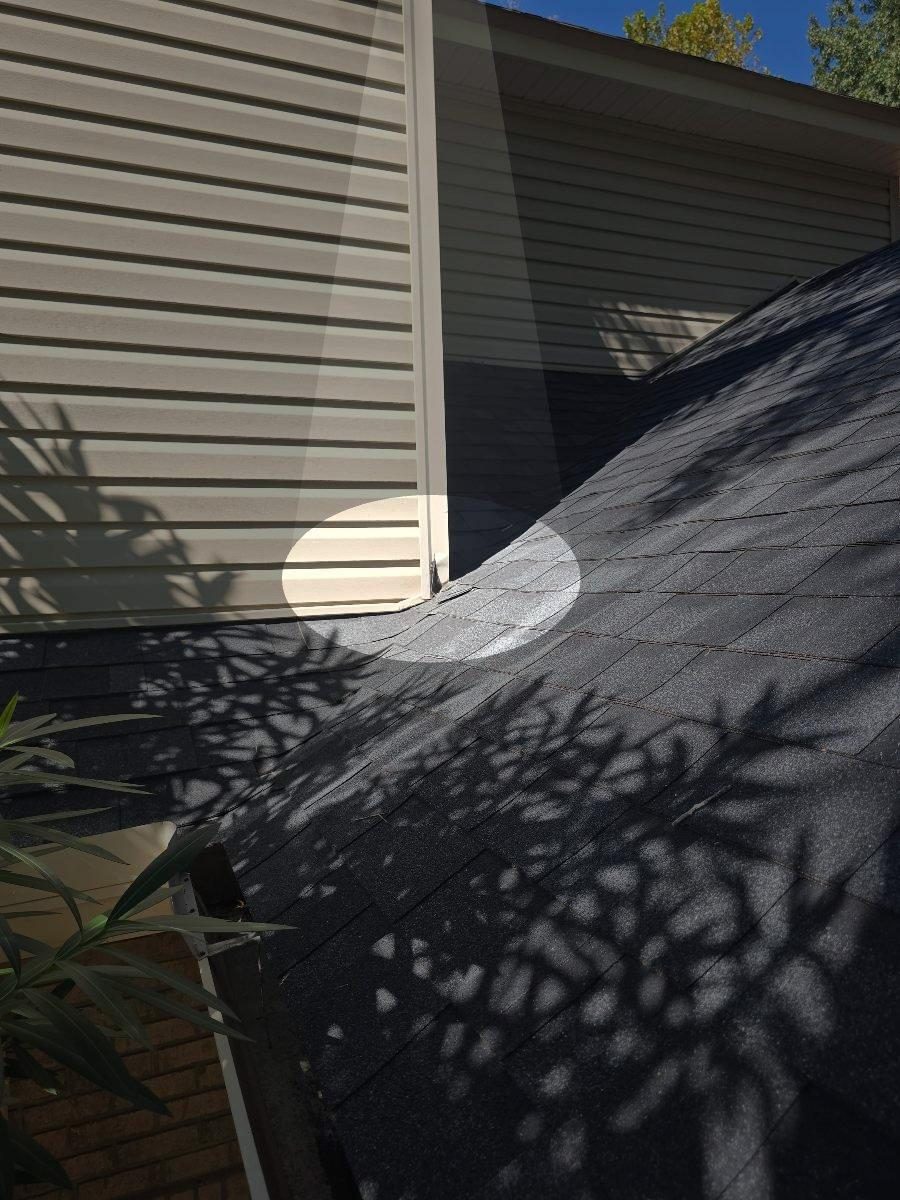
What we found
The corner trim — the protective board that covers the outside edge where two wall surfaces meet — was cut or modified where the wall intersects a roof valley. A roof valley is the V-shaped channel formed where two roof slopes meet, and it carries a large volume of runoff. The modification interrupts the designed drainage path for water flowing from that valley and the roof above.
Why it happens here
Roof valleys concentrate runoff and rely on flashing — thin metal sheets shaped to channel water — to direct that runoff away from wall assemblies. Corner trim is part of a coordinated system: it is shaped and positioned so water sheds outward and downward past the wall. When trim is cut in a way that breaks that path, water that should flow away from the wall can instead be directed toward it.
What it means for you
With the drainage path interrupted at this valley-wall intersection, water flowing off the roof has fewer clear routes away from the wall assembly. This increases the potential for moisture to reach areas behind the wall surface.
What to do
A qualified roofing contractor should evaluate and repair the condition, with particular attention to restoring proper water management at the valley-wall intersection.
How common is this
Inspectors routinely examine valley intersections and the trim and flashing around them. When a drainage path is found to be interrupted, repair by a roofing professional is the standard next step.
Getting a roofing contractor to assess and restore the drainage path here is the straightforward way to address what was observed.
Curious what's on record for a specific address?
Look it up on PermitSearch → (opens in a new tab)Ready to book your own inspection?
Schedule an inspection →