
That Staining Under the Balcony Is a Drainage Story, Not Just a Stain
What we found
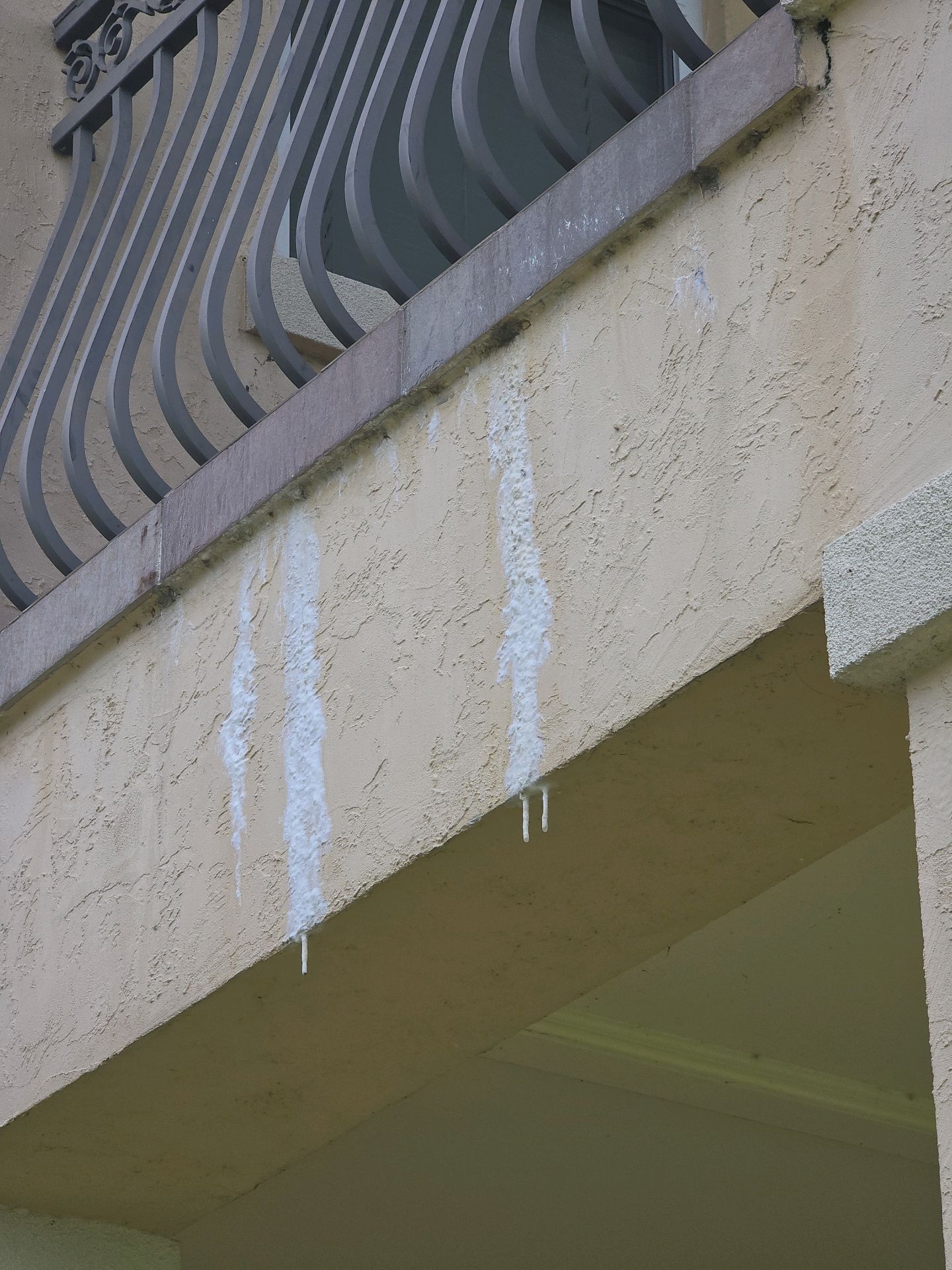
At the edge detail where a second-floor balcony's tile floor meets the exterior wall, several tiles had separated and displaced from the substrate. Below the failed joint, the exterior wall showed visible water staining consistent with water running down the wall face rather than being shed away from the building.
Why it happens here
Where a balcony floor meets the wall, it takes a well-built edge — a proper lip to shed water, plus flexible sealant — to keep rain moving away from the house instead of running down the wall. Tile out in the open like this leans especially hard on that edge staying intact through years of sun and rain and the way materials expand and contract with the seasons.
What it means for you
Once that edge gives way, water isn't being sent away from the house anymore — it's running into it. Left alone, that steady moisture can work into the surface underneath, the wall behind the stucco, and eventually what's inside — and the staining you can see is usually just the first sign, not the whole story of what's happening behind it.
What to do
Have a qualified tile or waterproofing contractor evaluate the failed edge detail, reseat or replace the displaced tiles, and rebuild the edge so water drips clear of the wall instead of clinging to it — sooner rather than later, since water is actively getting in right now.
How common is this
A regular finding on multi-story homes with tiled balconies in Northeast Florida's exposed, high-rainfall climate. We check balcony edge details specifically because staining below is often visible well before interior damage shows up.
The stain tells you where the water's going — the edge detail is what tells you why.
Want the permit history on a property you're eyeing?
Look it up on PermitSearch → (opens in a new tab)Ready to book your own inspection?
Schedule an inspection →