
Cloth-Jacketed Wiring: Old-Looking Isn't the Same as Unsafe
What we found
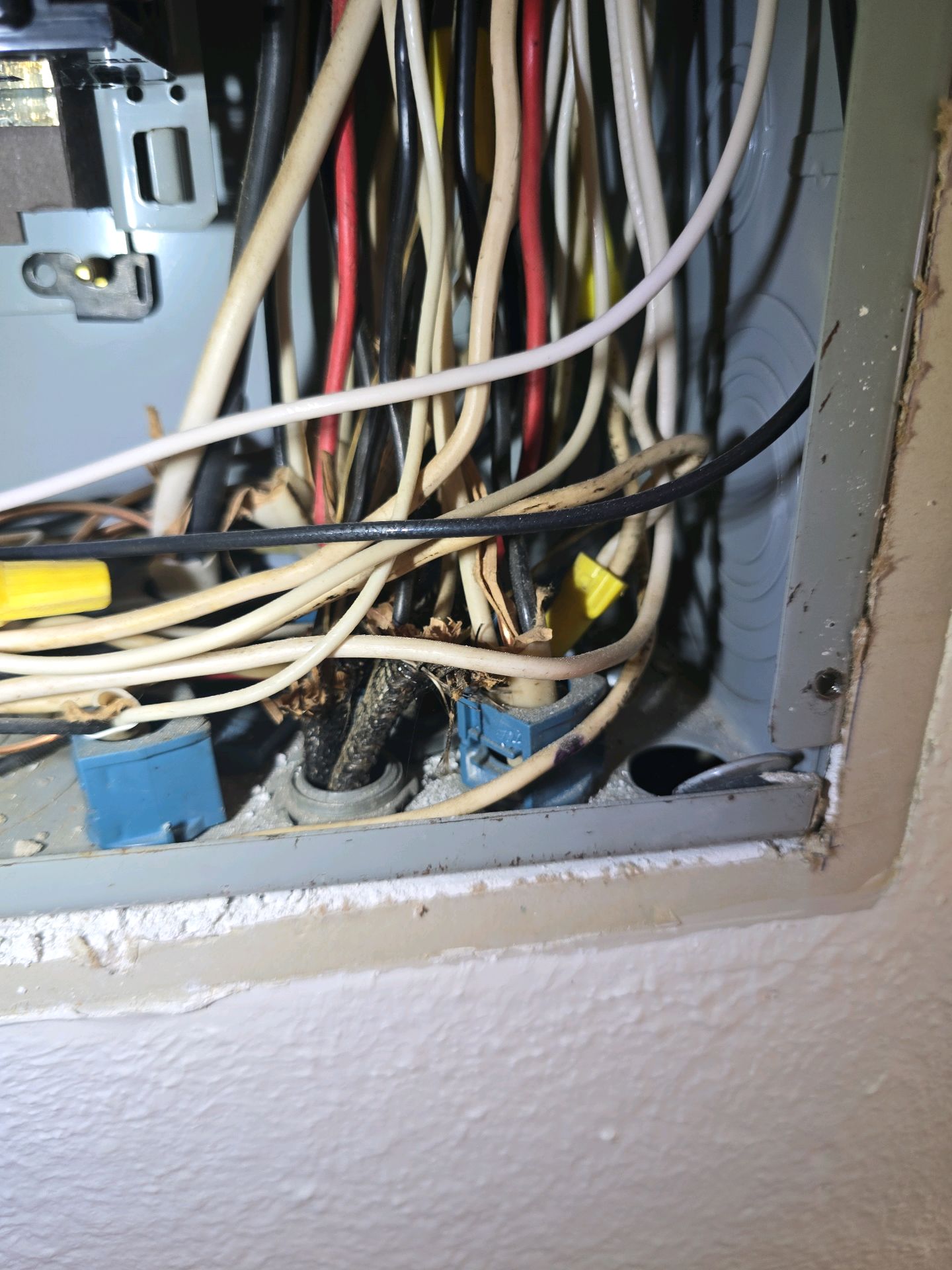
Cloth-jacketed wiring — copper conductors wrapped in a woven textile braid rather than modern plastic sheathing — in portions of the branch circuit distribution at a recent Jacksonville-area inspection.
Why it happens here
Cloth-braided jacketing was a standard manufacturing method used broadly through the mid-twentieth century, and it's common to find surviving runs of it in homes from that era that haven't had a full rewire.
What it means for you
The cloth braid is really just the outer wrap — the plastic insulation underneath is what actually keeps the electricity safely contained. Wiring like this is generally fine as long as those conductors and their insulation are still in good shape, but over decades the cloth braid can dry out and fray, especially near junction boxes or anywhere it rubs.
What to do
Have a licensed electrical contractor evaluate any accessible sections that show visible fraying or brittleness, and monitor the rest periodically — this isn't automatically a rewire situation.
How common is this
A regular finding in Jacksonville-area homes old enough to predate modern plastic-sheathed cable. We note it on every inspection where it's visible, distinct from more serious wiring-type findings like aluminum branch circuits.
The look of a wire is not its safety record — condition of the insulation underneath is what actually matters here.
Curious what's on record for a specific address?
Look it up on PermitSearch → (opens in a new tab)Ready to book your own inspection?
Schedule an inspection →