

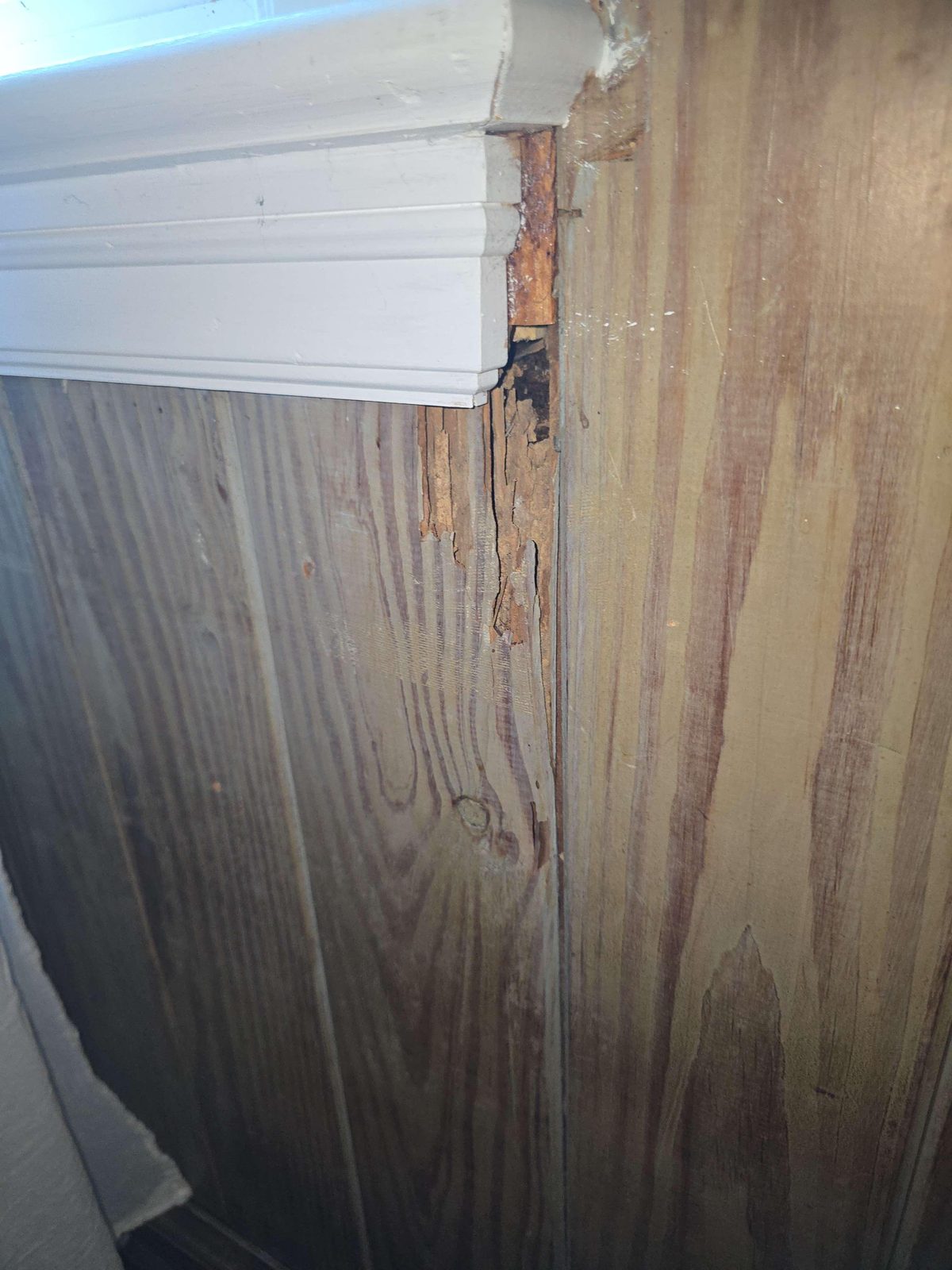
Wood damage consistent with termite activity was observed at an interior bedroom wall
What we found
During the inspection, visible wood damage was observed at an interior bedroom wall surface. The appearance of that damage is consistent with termite activity.
Why it happens here
Wall framing and sheathing — the structural wood members and panels that make up your walls — do the job of holding the house together. Wood-destroying insects work inside wood, hollowing it out from within. Because walls are enclosed, what shows at the surface does not always reflect what is present deeper inside the wall cavity.
What it means for you
The damage observed is at the surface of the wall. The full extent of any damage inside the wall cavity was not visible to the inspector, which is why a specialist with the right tools and training is the appropriate next step.
What to do
Have a licensed pest control operator — a professional certified to inspect for wood-destroying organisms — evaluate the wall. Depending on what they find, a qualified contractor may also be needed to assess the structural framing and determine what repairs are appropriate. Coordinate this before your inspection contingency expires.
How common is this
Wood-destroying insect damage is something inspectors specifically look for and report. A follow-up Wood-Destroying Organism (WDO) inspection by a licensed pest control professional is a routine and well-understood next step in this situation.
Getting a licensed pest control operator in before your contingency deadline gives you the clearest possible picture of what you're working with.
Curious what's on record for a specific address?
Look it up on PermitSearch → (opens in a new tab)Ready to book your own inspection?
Schedule an inspection →