
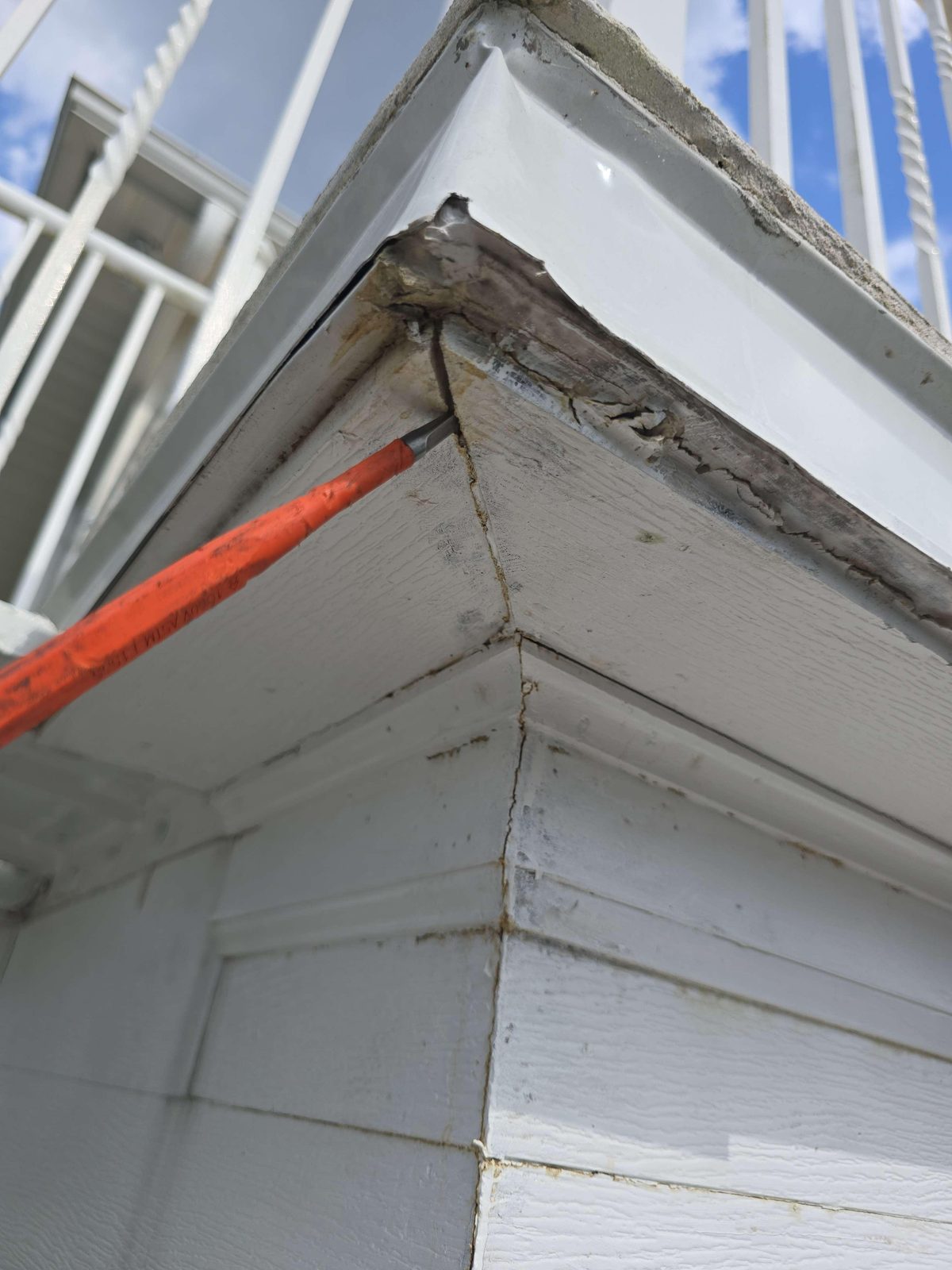
The trim where the balcony meets the exterior wall showed high moisture and open gaps at the joints
What we found
At the trim detail where the balcony floor meets the adjoining exterior wall, the inspector measured high moisture content in the material and observed visible staining and discoloration. There were also open gaps and voids at the joints — the seams where sections of trim meet one another.
Why it happens here
Trim at a balcony-to-wall transition is part of a system designed to shed water away from the building. Flashing (thin layered material installed to direct water outward) and sealed joints work together to keep water moving away from the wall assembly — the layers of framing, sheathing, and finish material behind the surface you can see. When joints in the trim are open, that system has a break in it, and moisture that enters can reach materials that are not meant to stay wet.
What it means for you
Elevated moisture readings and open joints at this location mean water has had a path into the assembly. The staining and discoloration visible on the surface are signs that moisture has been present. What lies behind the trim — framing and other structural material — cannot be seen without opening the wall, so the full extent of any effect is not known from the exterior alone.
What to do
A qualified roofing or waterproofing contractor should evaluate this area to identify the source of the moisture and determine what repairs are needed. Because damage behind the surface can be difficult to assess without further investigation, it is worth scheduling this evaluation before your inspection contingency — the deadline by which you can request repairs or renegotiate — expires.
How common is this
Inspectors routinely examine balcony-to-wall transitions because this detail is one that warrants careful attention. Identifying open joints and elevated moisture here is a standard part of what a thorough inspection covers, and repairs to flashing and trim joints are a known scope of work for roofing and waterproofing contractors.
Getting a specialist's eyes on this before your contingency deadline gives you the clearest picture of what the repair involves.
Curious what's on record for a specific address?
Look it up on PermitSearch → (opens in a new tab)Ready to book your own inspection?
Schedule an inspection →