

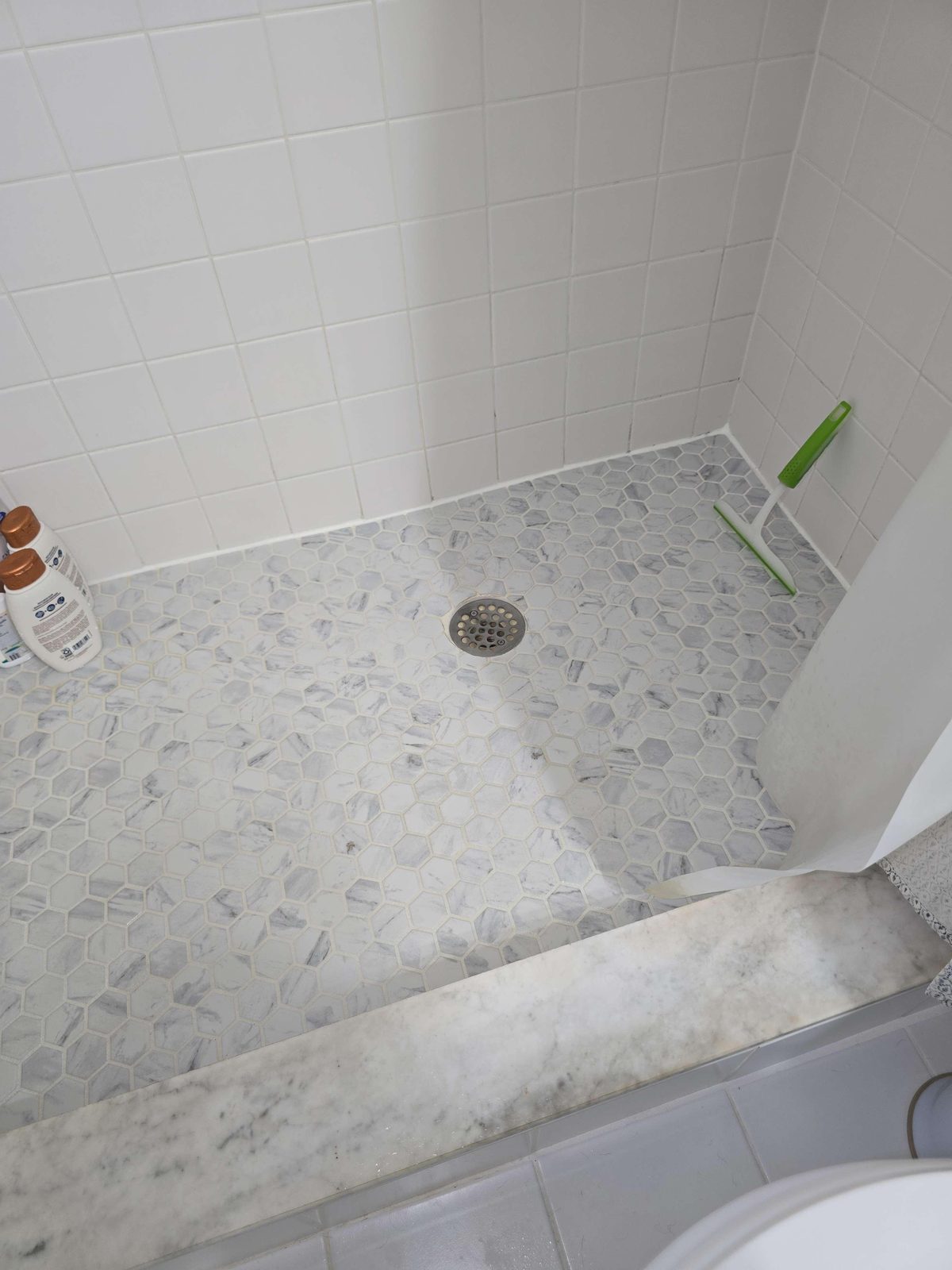
The shower floor has a second layer of tile laid directly on top of the first
What we found
At the shower floor, the cross-section visible at the drain showed what appeared to be a second layer of tile applied directly on top of the original tile — a tile-over-tile installation.
Why it happens here
A shower pan is the waterproof liner that sits beneath the tile and keeps water from reaching the structure below. When new tile is set over existing tile rather than on a freshly exposed surface, the pan is sealed under both layers and cannot be seen or touched. Tile depends on a solid, well-bonded base to stay in place, and slope toward the drain matters for water to run off; a second layer added on top affects both of those conditions.
What it means for you
Because the pan is now covered by two layers of tile, its current condition cannot be assessed by visual inspection. Any issue with adhesion of the upper tile layer, or with the pan beneath it, would not be visible at the surface.
What to do
Have a qualified tile or bathroom remodeling contractor evaluate the adhesion of the upper tile layer and assess, as far as is possible, the condition of the shower pan and the original tile underneath.
How common is this
Inspectors look for tile-over-tile installations as a routine part of examining shower floors, and a contractor evaluation of this kind is a standard next step.
A contractor visit will give you a clearer picture of what's underneath and what, if anything, needs to change.
Curious what's on record for a specific address?
Look it up on PermitSearch → (opens in a new tab)Ready to book your own inspection?
Schedule an inspection →