
When Shingles Age Faster Than They Should — and What Ventilation Has to Do With It
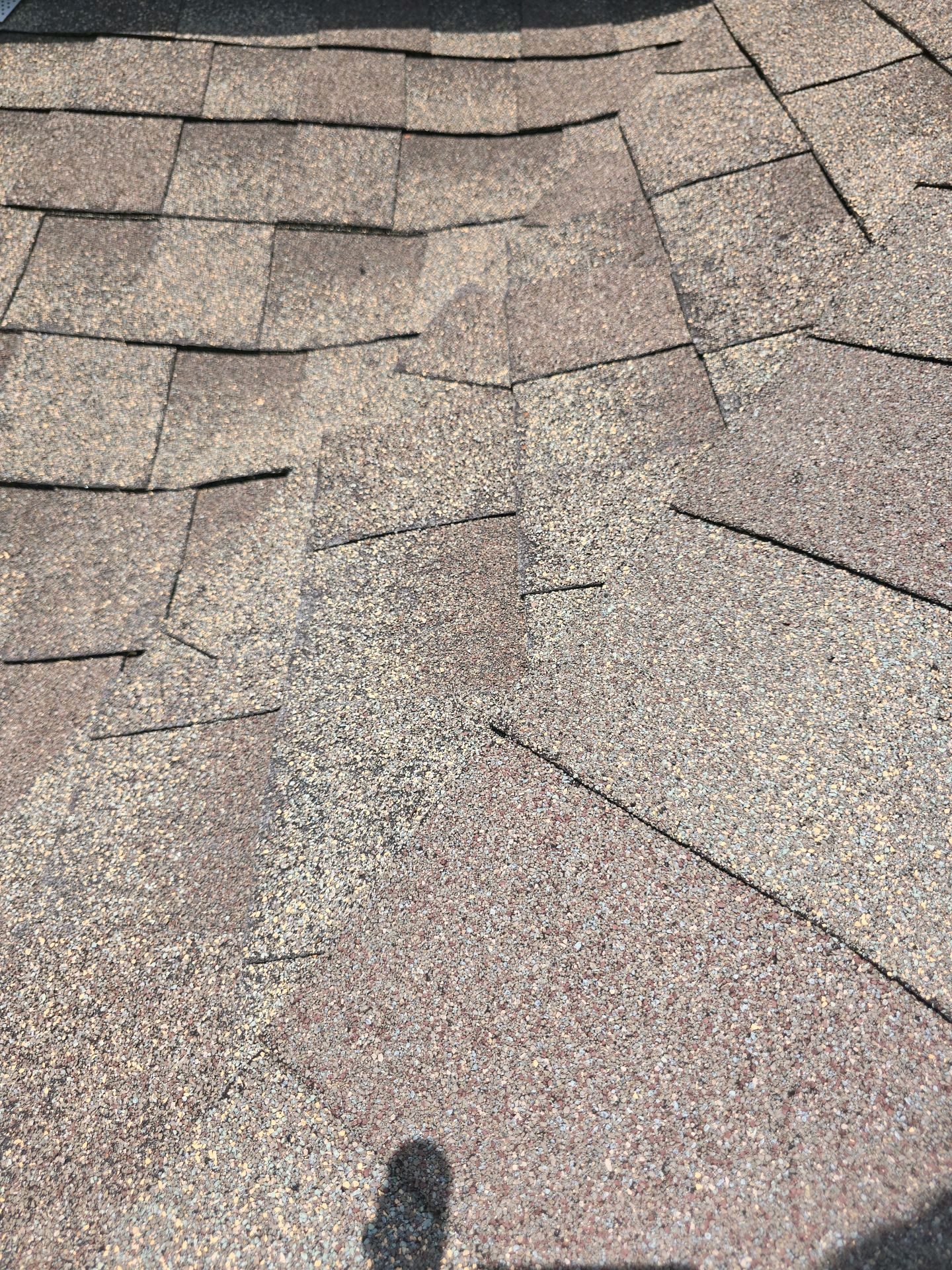
What we found
Architectural shingles showing signs of premature aging in one section of the roof, alongside limited exhaust ventilation of the roof assembly in that same area.
Why it happens here
Jacksonville's heat and humidity are hard on a roof deck that isn't venting properly — trapped heat and moisture under the sheathing accelerates exactly the kind of wear inspectors look for.
What it means for you
Manufacturer service-life expectations for architectural shingles typically run 25 to 30 years with balanced intake and exhaust ventilation. Uneven ventilation means uneven aging — and a roof that ages unevenly loses some of its resistance to wind-driven rain well before the rest of the roof shows visible wear.
What to do
Have a qualified roofing contractor evaluate the shingles and the ventilation system together — fixing the airflow can meaningfully extend what's left of the roof's life, not just patch the symptom.
How common is this
A frequent pairing in inspections. Inadequate exhaust at upper roof areas is one of the most common contributors to accelerated granule loss and uneven weathering across a slope.
Not every roof finding means a full replacement — sometimes it means fixing how the roof breathes.
Want the permit history on a property you're eyeing?
Look it up on PermitSearch → (opens in a new tab)Ready to book your own inspection?
Schedule an inspection →