

An outdoor electrical outlet had reversed wiring, a missing weatherproof cover, and several other conditions worth correcting
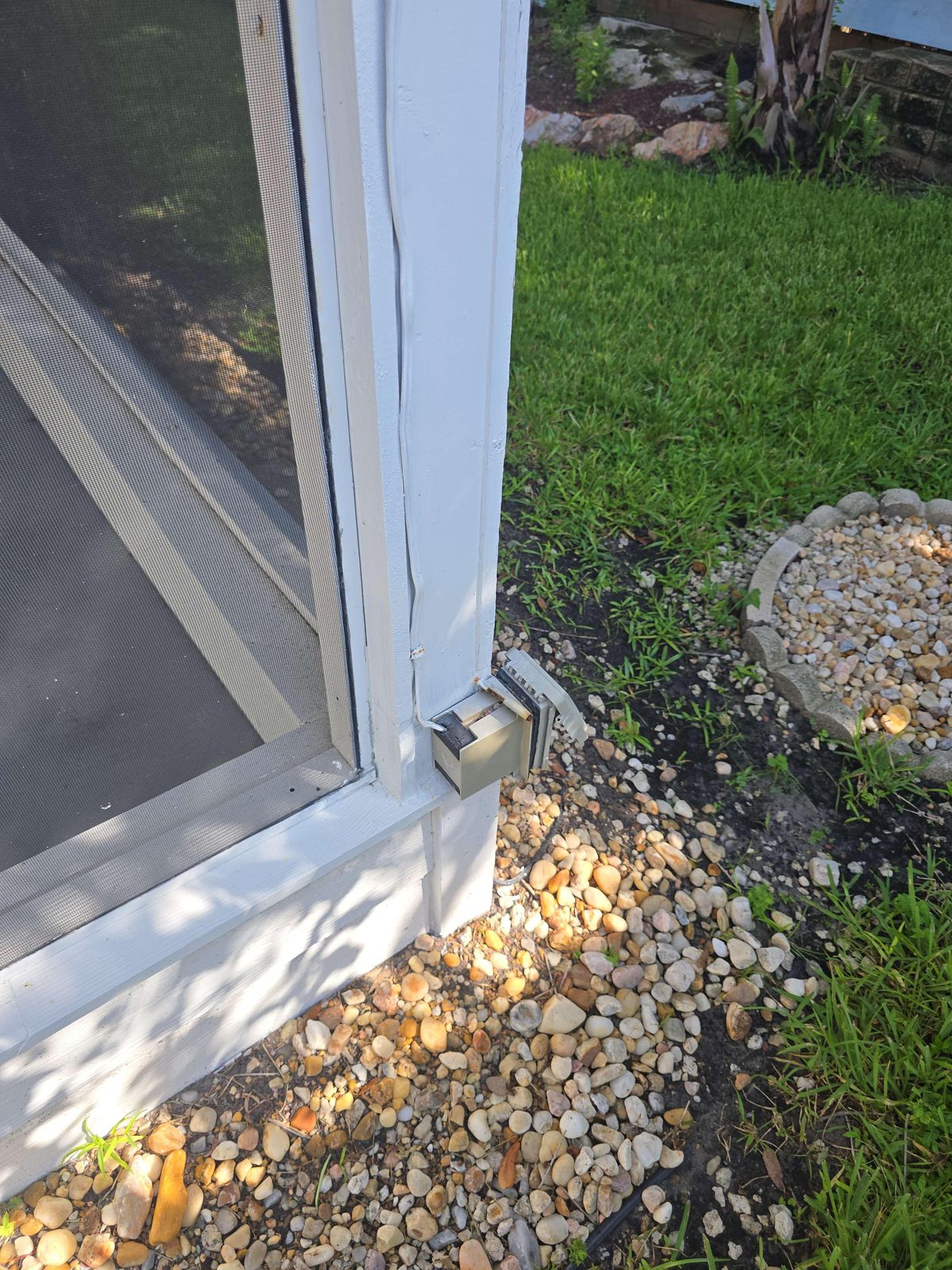
What we found
An exterior electrical outlet showed reversed hot and neutral polarity (the two wires that carry current were connected to the wrong terminals), a cover plate that was not an in-use type (a cover designed to stay closed and weatherproof even when a plug is inserted), supply cable running to the box without conduit—a protective sleeve—around it, an opening in the junction box that was not sealed, and no drip loop (a downward curve in the cable just before it enters the box, intended to shed water away from the opening).
Why it happens here
An electrical outlet has two conductors: a hot wire that carries live current and a neutral wire that completes the circuit. Devices are built on the assumption that only the hot side is energized when the switch or circuit is off; when polarity is reversed, parts of a connected device that are expected to be safe to touch can carry live current instead. The cover, conduit, sealed box, and drip loop all serve the same general purpose—keeping water out of the wiring and connections. An in-use cover maintains that seal with a plug in place; conduit shields the cable from physical damage and moisture along its run; a sealed box keeps water from entering through any gap in the enclosure; and a drip loop uses gravity to direct water droplets away before they can travel along the cable into the box.
What it means for you
Reversed polarity is worth correcting promptly because it changes which parts of a plugged-in device are energized. The missing or inadequate weatherproofing measures—the cover, the conduit, the unsealed box opening, and the absent drip loop—each leave pathways for water to reach the wiring and connections inside.
What to do
Have a licensed electrical contractor evaluate and correct all of the conditions at this outlet: reversing the polarity to the proper orientation, installing an in-use weatherproof cover, adding conduit protection to the supply cable, sealing the junction box opening, and forming a proper drip loop.
How common is this
Exterior outlets get a close look during every home inspection, and finding a combination of conditions like these is something inspectors routinely report. Correcting them is standard electrical work for a licensed contractor.
A licensed electrician can address all of these items in a single visit, leaving the outlet safe and properly protected.
Curious what's on record for a specific address?
Look it up on PermitSearch → (opens in a new tab)Ready to book your own inspection?
Schedule an inspection →