

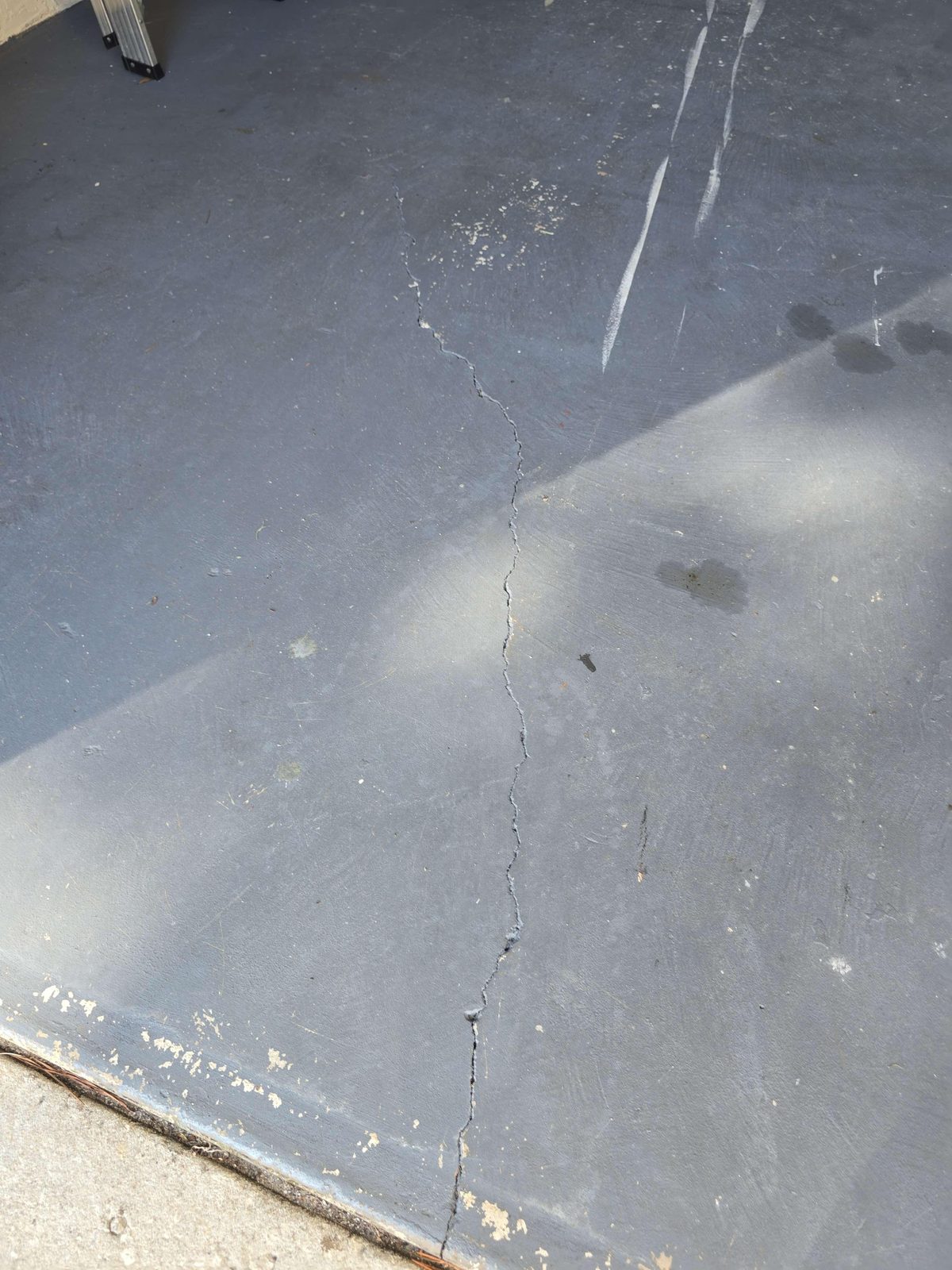
The garage floor slab has cracking and sections that have shifted to different heights
What we found
The concrete slab that forms the garage floor showed cracking, and the slab is not level throughout. In some areas, one section of the slab sits at a noticeably different height than the section next to it — a condition called differential offset.
Why it happens here
A concrete slab is poured in sections and rests on the ground beneath it. When slab sections move independently of one another, the edges where they meet can end up at different heights. That kind of offset — where one section is higher or lower than the one beside it — is generally considered a more meaningful signal of underlying movement than a surface crack on its own, because it shows the sections are no longer moving together.
What it means for you
Beyond that, movement in the garage slab can place stress on the structural elements nearby.
What to do
Have a qualified structural engineer or foundation contractor take a look. They can assess how much movement has occurred and tell you whether any repair or stabilization is needed.
How common is this
Slab cracking is something inspectors routinely look for and report. Differential offset — the raised edge between sections — is a specific condition that inspectors flag for professional follow-up, and addressing it is a recognized type of repair.
A structural engineer or foundation contractor can give you a clear picture of what the slab needs and what, if anything, should happen next.
Curious what's on record for a specific address?
Look it up on PermitSearch → (opens in a new tab)Ready to book your own inspection?
Schedule an inspection →