
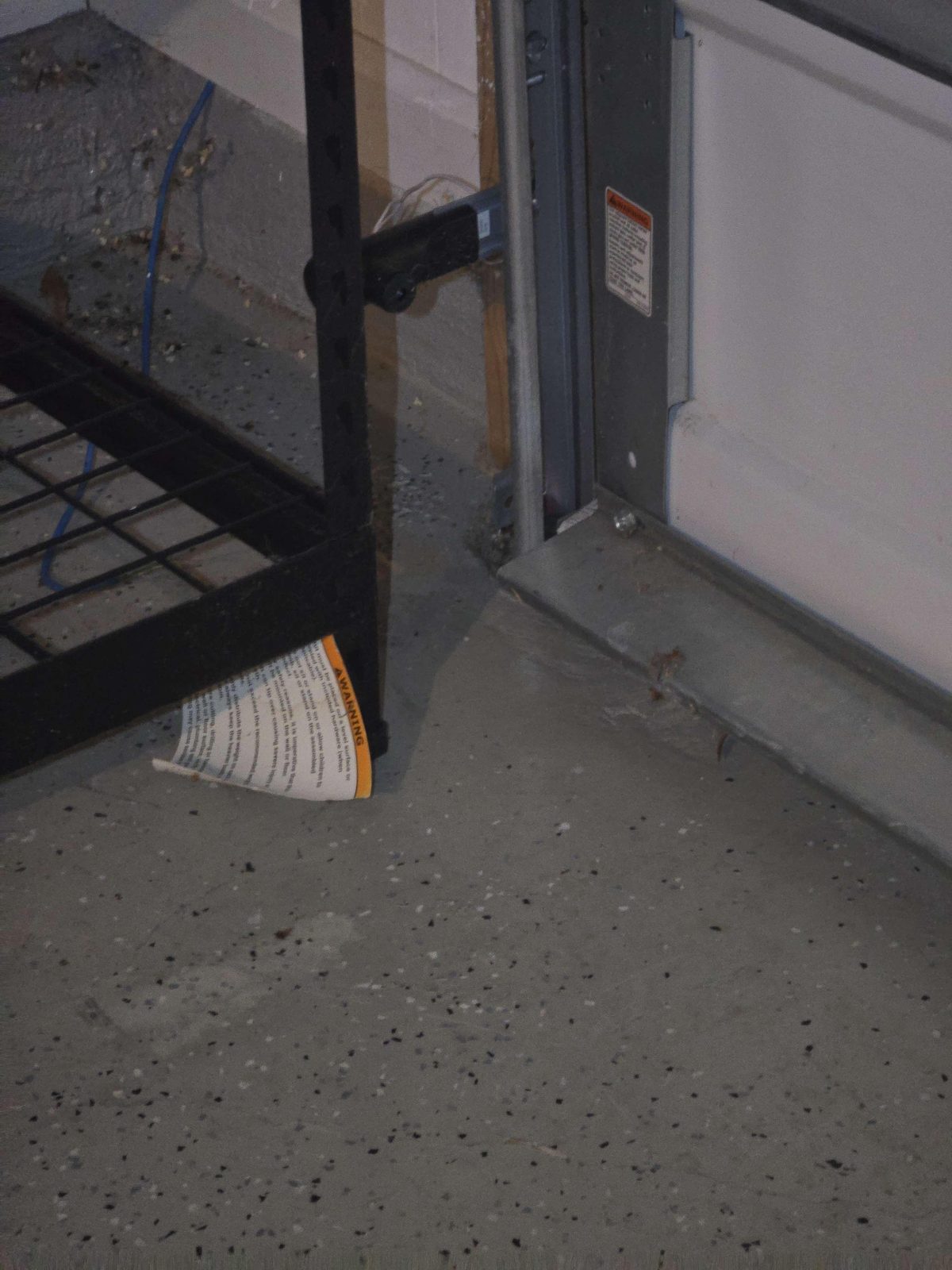
The garage door sensors are mounted higher than the recommended maximum of 6 inches above the floor.
What we found
The optical reversing sensors—the small paired devices on either side of the garage door opening that beam an invisible light across the doorway—were observed mounted at approximately 9 inches above the floor surface. The governing standard for residential garage door operators specifies a maximum mounting height of 6 inches above the floor.
Why it happens here
Photo-eye reversing sensors work by projecting a beam across the door's path; if something breaks that beam while the door is closing, the door reverses. The height at which the sensors are mounted determines how low an obstruction must be before the beam can detect it. When sensors sit higher than the specified maximum, the beam travels above the floor at a greater height, and a small object below that beam would not interrupt it.
What it means for you
At the observed height, the detection zone begins higher off the ground than the standard requires, which reduces the sensor's ability to register small obstructions in the door's path before the door reaches them.
What to do
Have a qualified garage door technician evaluate the sensor placement and reposition the sensors to 6 inches or less above the floor surface, in line with the standard's requirement.
How common is this
Sensor mounting height is something inspectors routinely check as part of a garage door safety review, and repositioning a sensor bracket is a straightforward repair for a garage door technician.
This is a simple bracket adjustment—a garage door technician can measure, reposition, and verify the sensors in a single visit.
Curious what's on record for a specific address?
Look it up on PermitSearch → (opens in a new tab)Ready to book your own inspection?
Schedule an inspection →