
The chimney flue has displaced liner sections and no rain cap or spark arrester
What we found
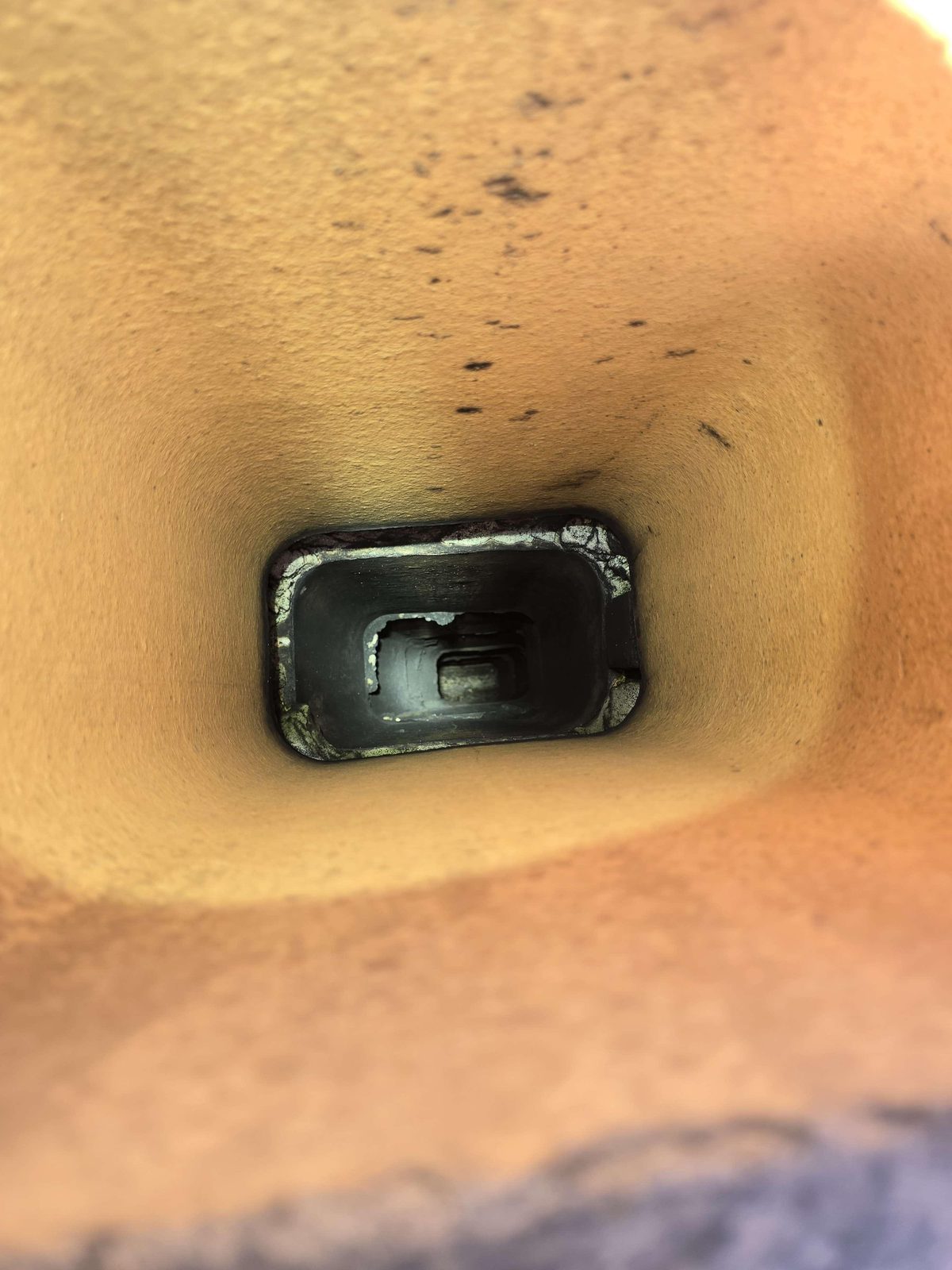
The chimney flue — the interior passage that carries smoke and combustion gases out of the house — was observed without a rain cap or spark arrester at the top opening. Inside the flue, the clay liner sections, which are the ceramic tiles that line the passage, were found displaced at multiple joints, meaning the sections are no longer sitting flush against one another and the interior pathway is irregular rather than continuous.
Why it happens here
A chimney liner is designed to contain combustion gases and guide them cleanly to the outside; when the liner sections are out of alignment, gaps form in that containment. A rain cap covers the top of the flue to keep water and debris out, and a spark arrester — a mesh screen that fits over the opening — stops embers from exiting the flue into the open air. Without these components, the top of the flue is open to whatever enters from above. Together, displaced liner joints and an open flue termination mean the chimney is not performing either of its basic jobs — containment and safe exhaust — as designed.
What it means for you
The displaced liner sections create gaps where combustion gases and embers could reach the building materials surrounding the flue rather than travelling up and out. The open flue termination means the interior of the chimney is exposed to rain and debris. The fireplace should not be used until a qualified professional has assessed and addressed both conditions.
What to do
Have the chimney evaluated and repaired by a qualified chimney professional — look for a CSIA-certified sweep (Chimney Safety Institute of America) or a licensed masonry contractor. The scope of work should cover realigning or relining the displaced clay liner sections and installing a rain cap and spark arrester sized to fit the flue termination. Do not use the fireplace before that work is completed and the chimney is confirmed ready for use.
How common is this
Displaced clay liner joints and missing chimney caps are conditions inspectors look for as a standard part of any fireplace and chimney review, and having both addressed by a chimney professional is a routine scope of work.
A chimney professional can give you a clear picture of the work involved and get the fireplace back to a usable condition.
Curious what's on record for a specific address?
Look it up on PermitSearch → (opens in a new tab)Ready to book your own inspection?
Schedule an inspection →