
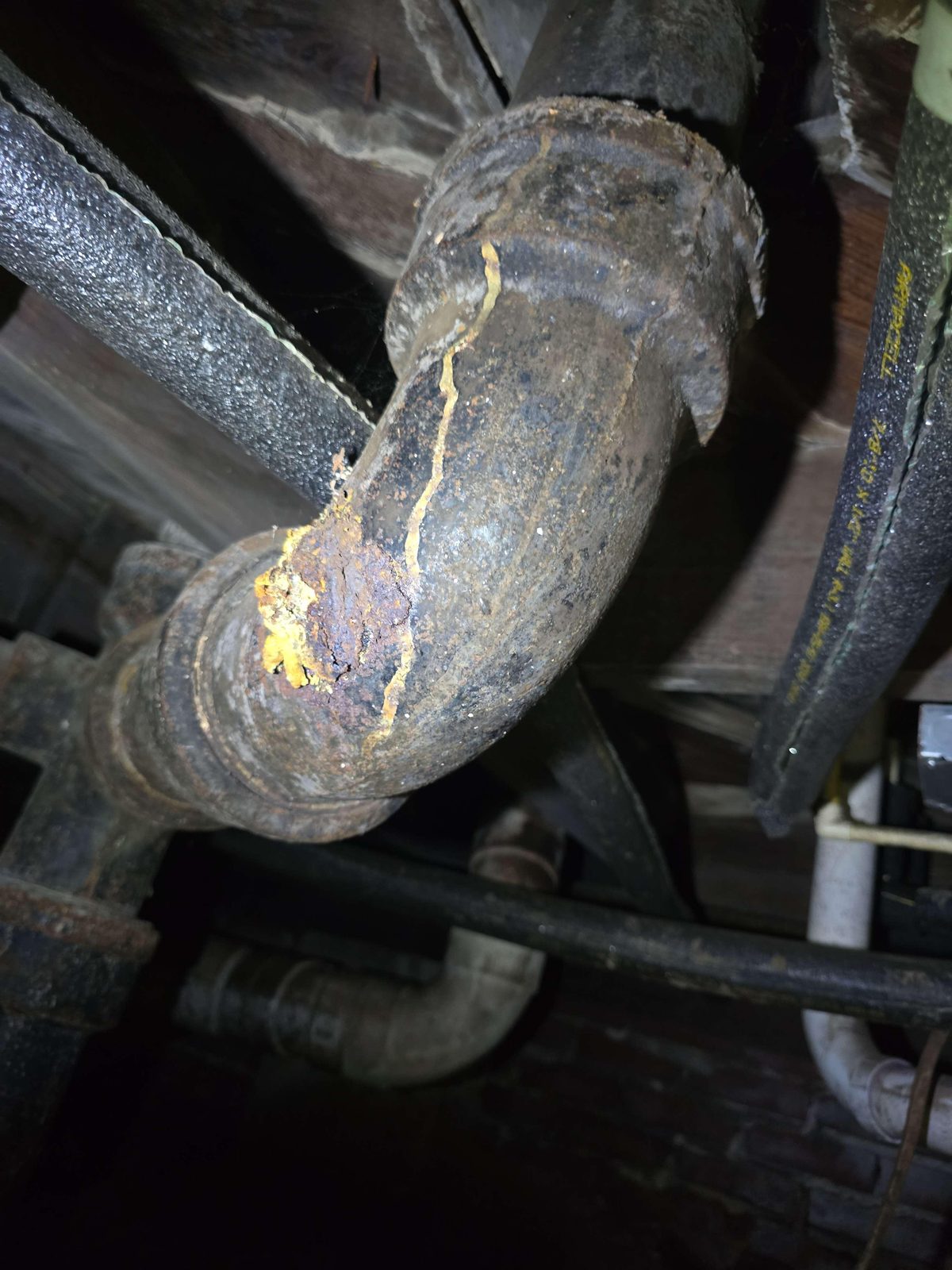
The cast iron drain pipes showed advanced rust and visible blistering
What we found
The cast iron drain waste vent piping — the network of pipes that carries wastewater and sewer gases out of the home — showed advanced surface rust. At several points along the pipe, that rust had progressed to blistering, meaning the surface was visibly raised and bubbled rather than smooth.
Why it happens here
Cast iron is an iron alloy, and like all iron it oxidizes over time when moisture is present. The pipe's job is to carry wastewater away cleanly and without leaking. Blistering is a late-stage form of corrosion in which the metal surface has broken down enough to push outward; at that stage, the wall of the pipe may be significantly thinner than it was when new, which compromises its ability to hold water and pressure without failing.
What it means for you
Where the pipe wall has thinned beneath a blister, it is more vulnerable to developing a through-wall breach. A breach in a drain pipe can mean slow drainage, blockages, or water escaping into the surrounding structure — walls, floors, or framing — rather than flowing out to the sewer.
What to do
Have a licensed plumbing contractor examine the piping in person. They can assess how far the deterioration extends and tell you whether individual sections can be repaired or whether replacement is the right call.
How common is this
Rust blistering on cast iron drain piping is something inspectors are trained to look for and report. Having a plumber evaluate and address it is a routine part of the home-buying process.
A plumber's assessment will give you a clear picture of what the pipes need — and a solid foundation for your next conversation with the seller.
Curious what's on record for a specific address?
Look it up on PermitSearch → (opens in a new tab)Ready to book your own inspection?
Schedule an inspection →