
The Wires in the Attic Had Burn Marks. Here's What That Tells You
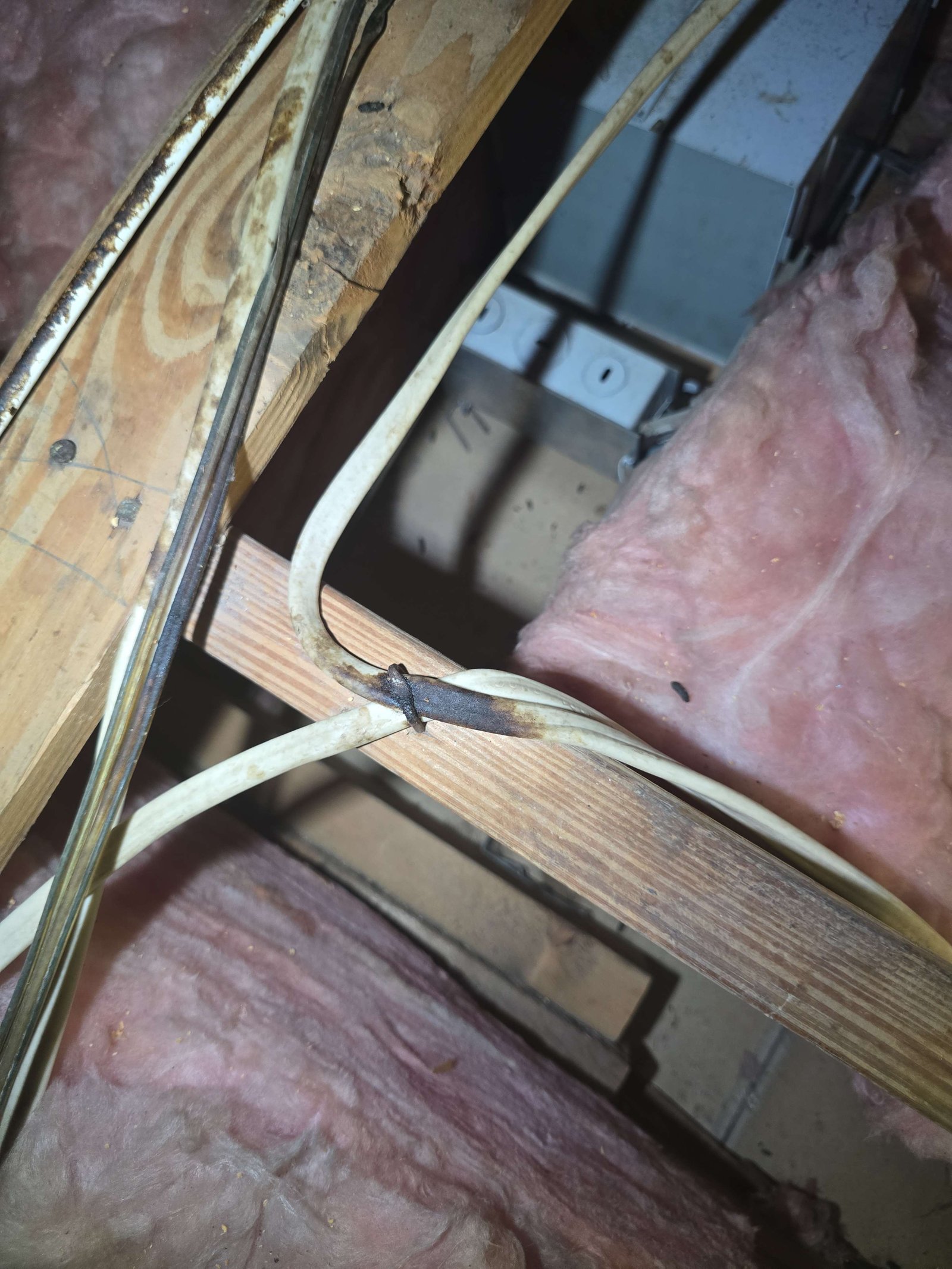
What we found
Dark scorch marks on the outer jacket of household electrical cable — the flat, plastic-sheathed wiring (often called Romex) that runs through nearly every home — at several spots in the attic over the main living area. Burn marks at more than one location means this wasn't a single unlucky nick; something made those circuits run hot.
Why it happens here
Wiring overheats for a short list of reasons: a connection that has worked itself loose (loose connections resist the flow of electricity, and that resistance becomes heat), a circuit asked to carry more than it was designed for, or a conductor that's been damaged. An attic makes it worse — summer attic temperatures in Jacksonville routinely pass 120°F, so heat in the wire has nowhere to go.
What it means for you
A scorched jacket is evidence about the past, not a prediction: at some point, this wiring already got hot enough to burn the marks you can see — and it did so lying against wood framing and insulation. That's why this finding goes at the top of the report rather than in the routine list. It doesn't mean the house is about to catch fire; it means the electrical system has already shown you a warning it only shows once it matters.
What to do
Have a licensed electrician evaluate and repair before your inspection contingency expires — the window in your contract where you can still negotiate or walk away. The cause is often specific and fixable: a loose connection at a junction box or an overloaded circuit that needs to be split. The point is to have it found and corrected while it's still on the seller's side of the table.
How common is this
Aging wiring in general is common in older Jacksonville homes. Visible scorching is not — most inspections come and go without it. When it does appear, it earns the strongest language we use, because it's one of the few findings that has already demonstrated the thing it warns about.
Most electrical findings are routine. This one wasn't — and the whole point of an inspection is knowing the difference before the house is yours.
Curious what's on record for a specific address?
Look it up on PermitSearch → (opens in a new tab)Ready to book your own inspection?
Schedule an inspection →