
Rust Blistering on a Cast Iron Drain Line: How Worried Should You Be?
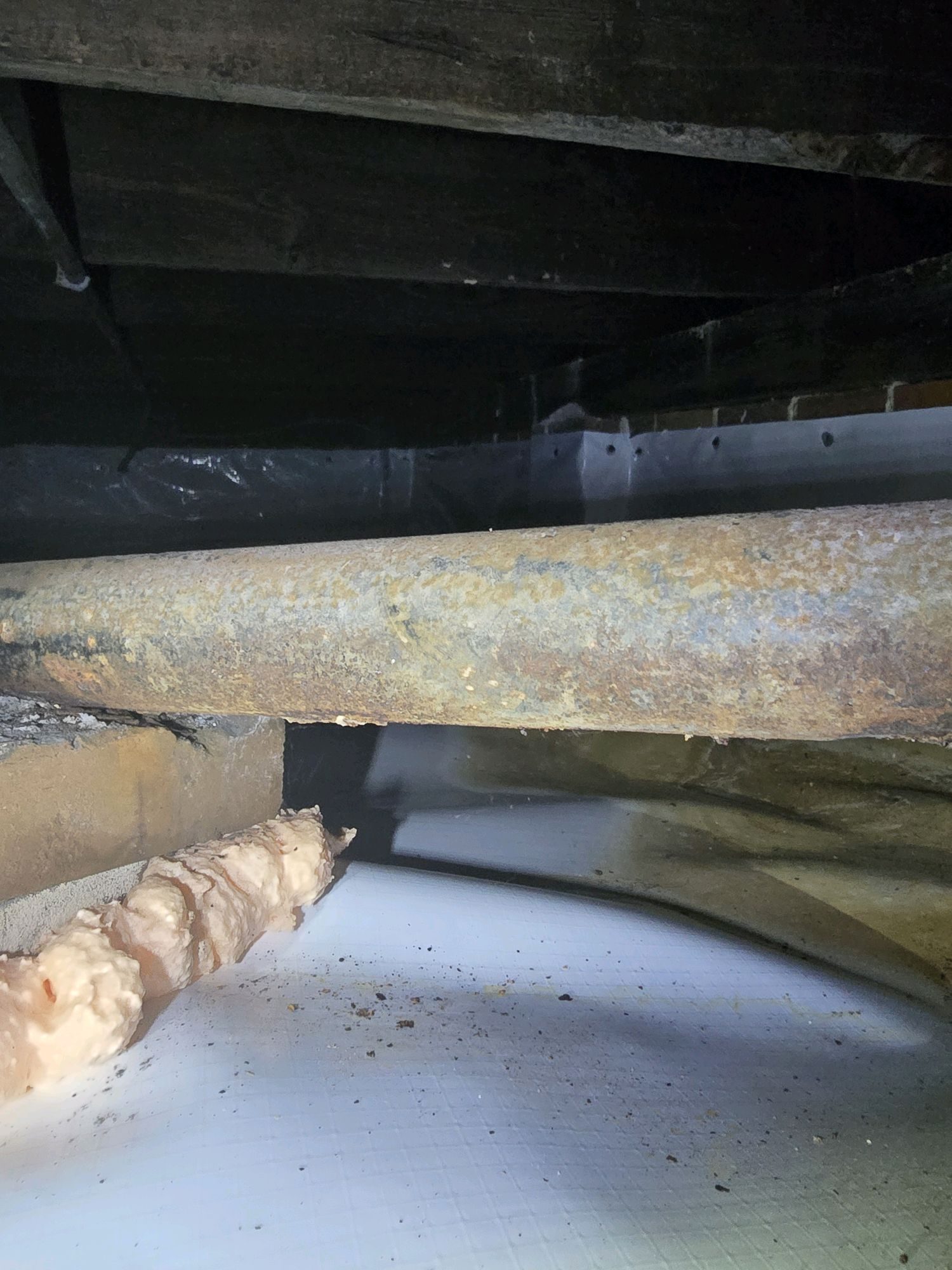
What we found
Rust blistering and hairline fissures at multiple locations along the cast iron drain lines. Fixtures were run for an extended period during the inspection without producing any visible leaks or backups.
Why it happens here
Cast iron drain pipe was standard in mid-20th-century construction, and it has a finite service life that depends heavily on soil conditions and usage — variables that can differ block to block in an older Jacksonville neighborhood.
What it means for you
No active leak during a two-to-three-hour inspection doesn't mean the pipe wall isn't deteriorating — that kind of damage can take months to fully manifest, and the interior condition of the pipe simply can't be assessed by looking at the outside.
What to do
A licensed plumbing contractor can evaluate the exterior condition, but a professional sewer scope is the only way to actually see inside the pipe and catch a developing problem before it becomes a backup.
How common is this
A frequent finding in homes with original cast iron plumbing. Rust blistering and surface cracking are the classic signs of late-stage corrosion inspectors specifically look for.
Not a leak today — but the kind of finding worth a real look before it becomes one.
Curious what's on record for a specific address?
Look it up on PermitSearch → (opens in a new tab)Ready to book your own inspection?
Schedule an inspection →